
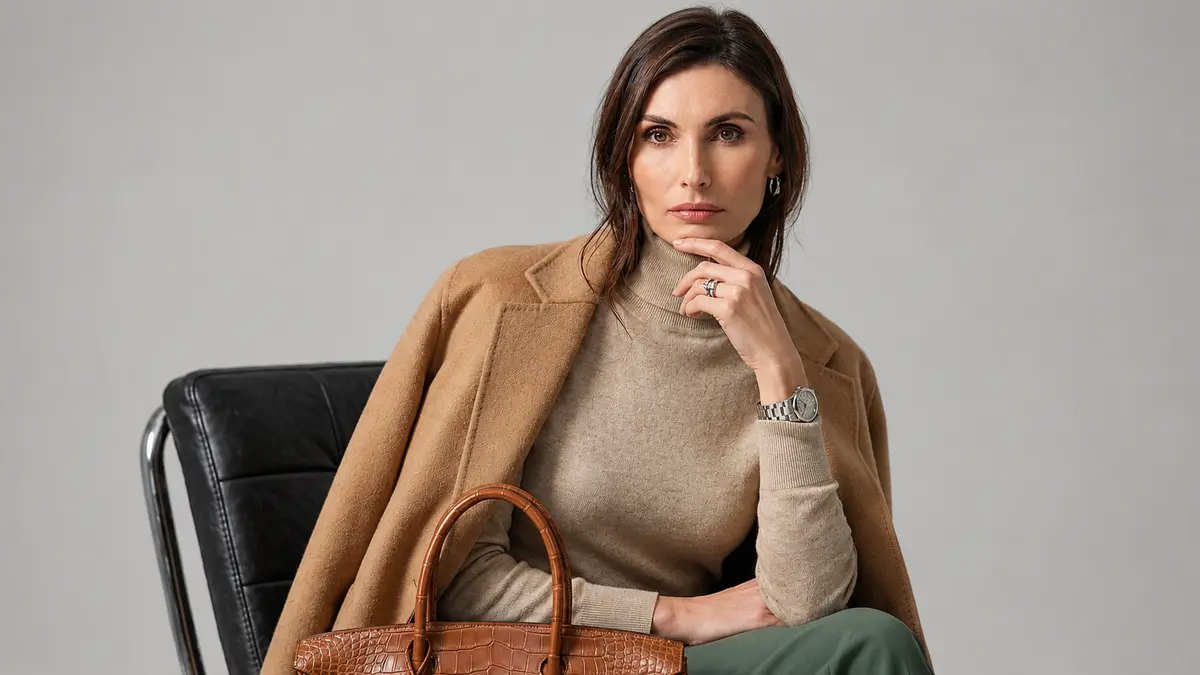
How to look expensive on a budget isn’t about designer labels. It’s about fit, fabric, color, and finish. A well-pressed $20 shirt that fits properly can look more polished than a $140 shirt that pulls or wrinkles.
Quick answer:
Choose well-fitting clothes, fabrics that drape nicely, and colors that work together. Clean shoes, wrinkle-free clothes, and one simple accessory complete the look.
You don’t need a new wardrobe to get started. Explore our minimalist wardrobe essentials guide for pieces that work together.
What Actually Makes an Outfit Look Expensive
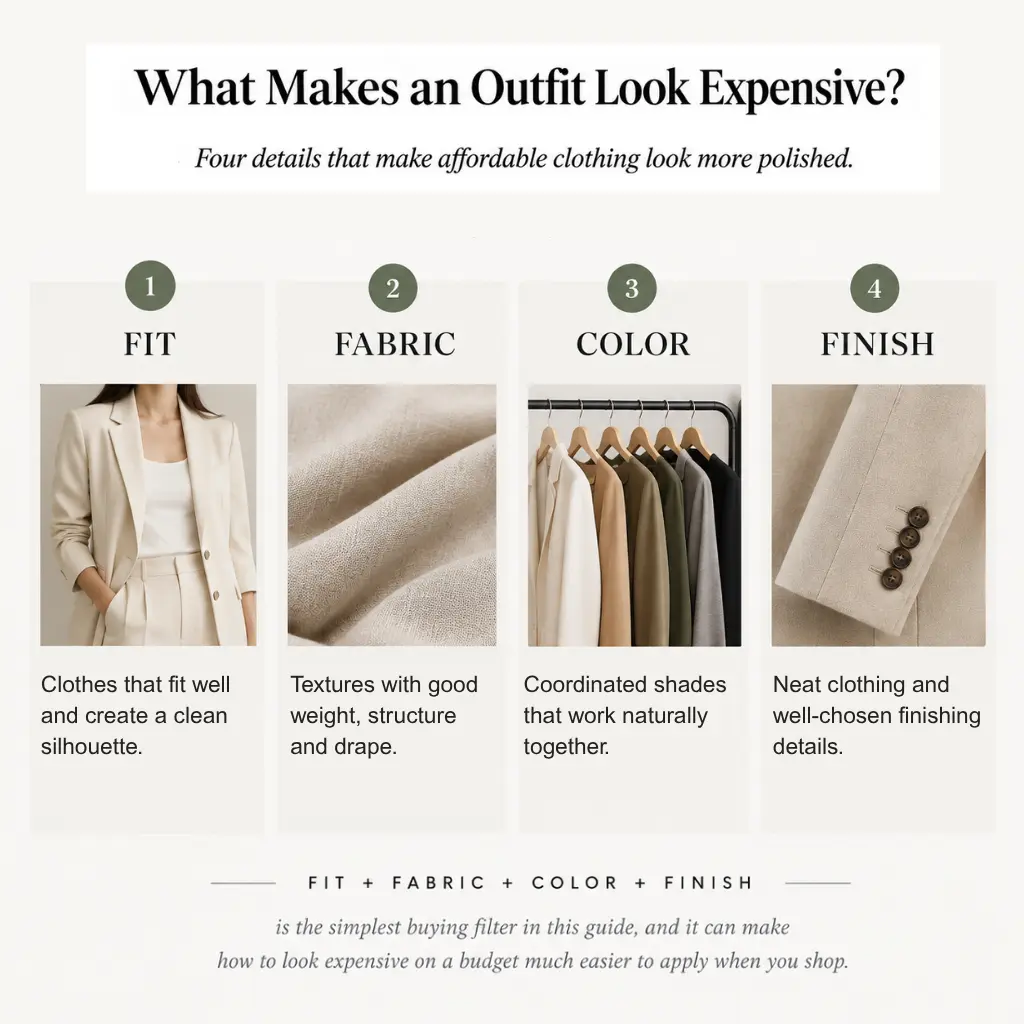
1. Fit: The Biggest Difference
A garment doesn’t need to be tight to look well-fitted. It should follow your natural proportions without pulling, sagging, or creating unnecessary bulk.
For example, a slightly relaxed blazer can look polished when the shoulder seams sit correctly and the sleeves end at the right length. Check these four areas:
A tailor can fix many of these problems. A shortened sleeve or a corrected hem can change the proportions of a whole outfit, and a simple alteration often costs less than buying another pair of trousers.
2. Fabric: Choose Weight and Drape
Look at how a fabric behaves rather than judging it by its name. A cotton shirt should feel substantial enough to wear comfortably without looking flimsy, while tailored trousers need enough structure to hold their shape without feeling stiff.
Cotton poplin, linen blends, merino knits, and well-made polyester blends can all work. The right choice depends on the garment.
Be cautious with fabrics that are excessively thin, see-through, or overly shiny when that finish doesn’t suit the design. Also check how easily the material wrinkles, attracts lint, or loses its shape.
3. Color: Keep the Palette Small
A small color palette makes pieces easier to combine and keeps outfits from looking cluttered. Bone, camel, slate, chocolate, ivory, and black are easy base colors. Add one darker or warmer shade for a little interest, such as burgundy, rust, or forest green.
The colors don’t need to match exactly; they just need to look good together.
4. Finish: Pressed, Clean, and Cared For
Even a well-chosen outfit can look unfinished when small details are neglected. A wrinkled shirt, worn shoe edges, loose threads, or pilled knitwear can distract from an otherwise polished combination.
Before wearing an outfit:
- Clothes: Steam or iron visible creases, especially around collars, cuffs, and trouser fronts.
- Shoes: Clean the uppers and check whether the soles or heels look excessively worn.
- Knitwear: Remove fabric pills carefully, following the garment’s care instructions.
- Accessories: Check clasps, loose stones, and scratched hardware.
You don’t need every accessory to match. Gold and silver can work together; what matters more is that the combination looks intentional rather than accidental.
How to Put Together an Expensive-Looking Outfit
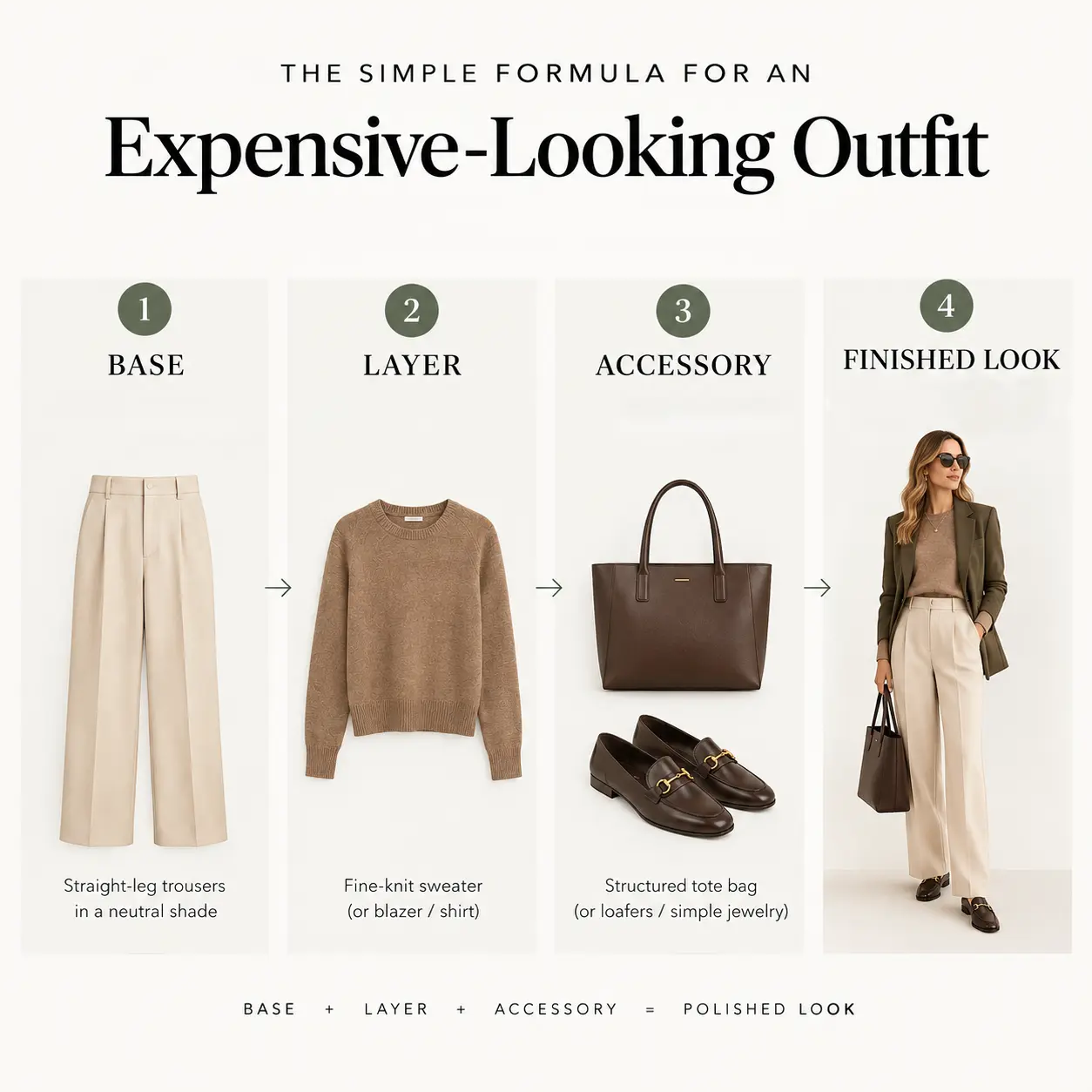
You don’t need several layers or statement accessories to make an outfit look put together. A simple combination of three elements is often enough: a well-fitted base, one structured or textured layer, and an accessory that completes the look.
This is an easy way to practice how to look expensive on a budget without buying a completely new outfit.
BASE + LAYER + ACCESSORY
1. Start with a Well-Fitted Base Piece
Choose something clean and structured, such as straight-leg trousers in a neutral shade or a well-cut midi skirt.
For a casual outfit, well-fitted straight-leg jeans can work just as well.
2. Add One Quality-Looking Layer
Pick a layer that gives the outfit shape without extra volume:
- A structured blazer
- A fine-knit sweater
- A crisp button-down worn open over a fitted camisole
One good layer is usually enough. You do not need several to look polished.
3. Finish with One Intentional Accessory
Choose one finishing detail instead of several:
- A structured tote bag
- Pointed-toe flats
- A minimal gold necklace
Quick check: Before reaching for another item, ask whether it improves the outfit or simply makes it feel busier.
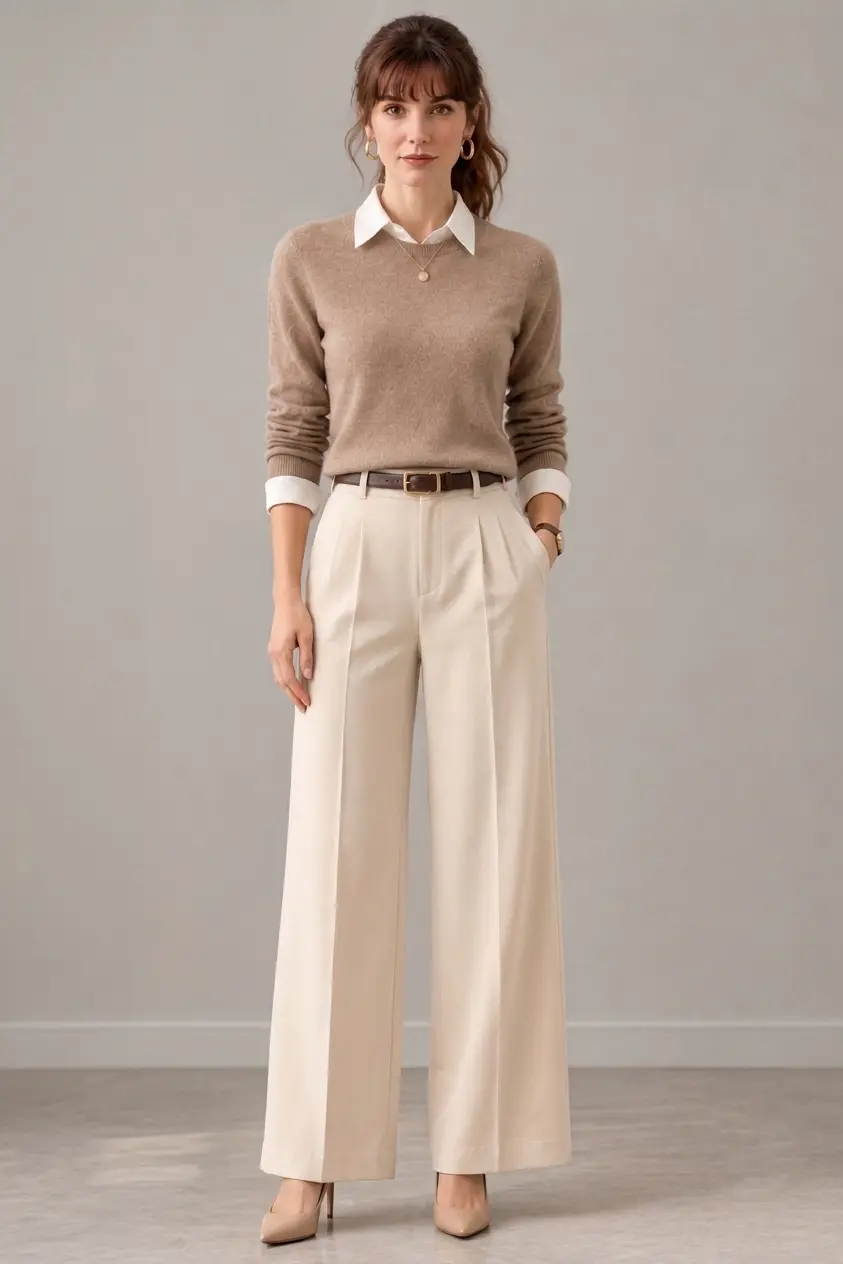
Straight-leg trousers + ivory fine-knit sweater + structured brown tote create a polished outfit with just three pieces. For a casual version, swap the trousers for well-fitted straight-leg jeans. The same mix-and-match approach works for office dressing when building a capsule wardrobe for work.
When deciding how to look expensive on a budget, focus on pieces that improve several outfits rather than buying something for just one occasion.
These six wardrobe staples are useful because they can be styled in different ways and added gradually. You may already own some of them.
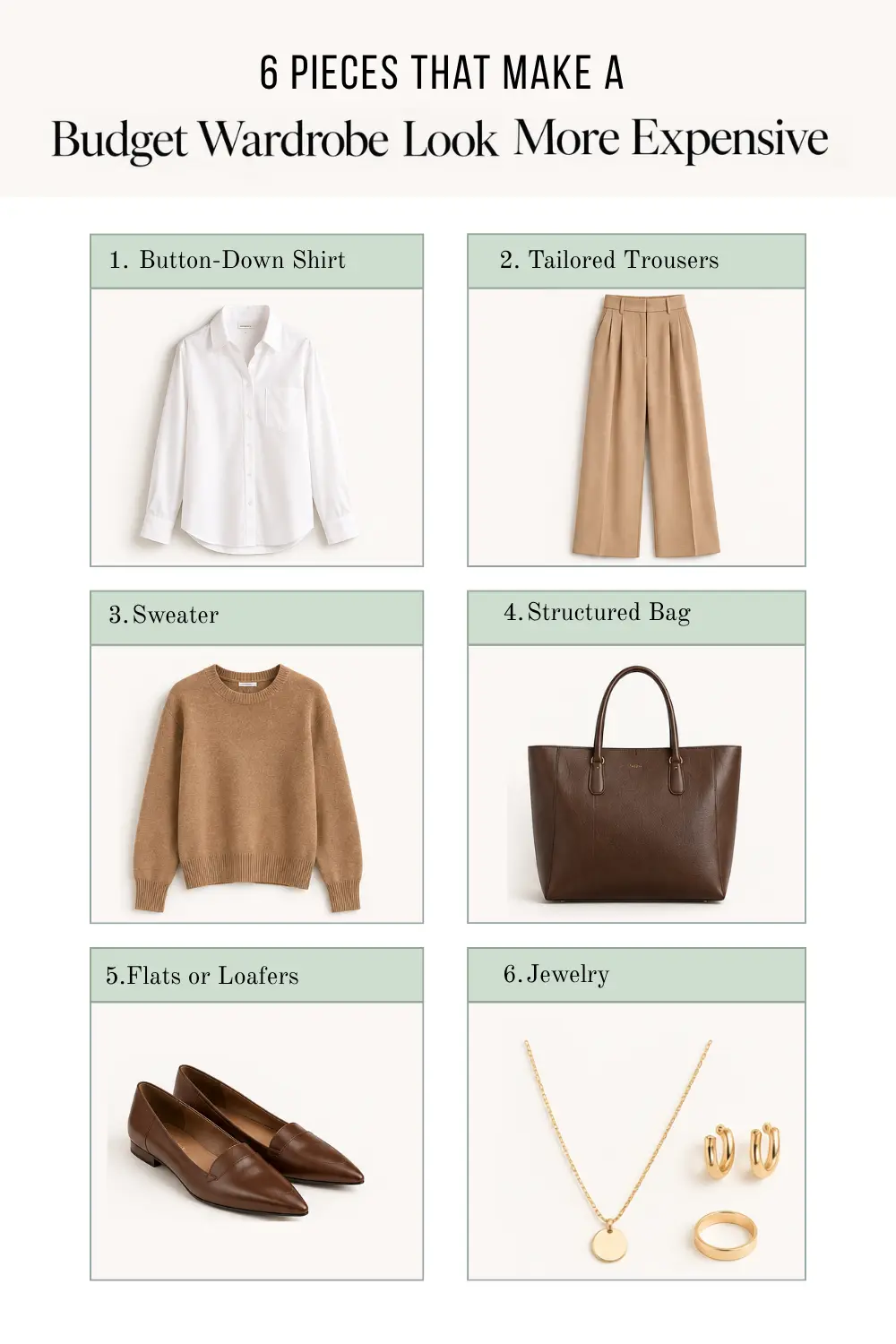
1. A White Button-Down Shirt
One shirt can create several outfits. Wear it tucked into trousers, half-tucked with jeans, layered under a knit, or on its own with wide-leg pants.
Look for fabric that isn’t see-through and a collar that holds its shape. A good fit also gives you more options when you style a white button down shirt.
2. Tailored Trousers in a Neutral
Straight-leg, wide-leg, and slightly tapered trousers can all look polished. Choose a shape that suits your proportions and works with the rest of your wardrobe.
Before buying, check two things:
- Fit: The waist, hips, rise, and seat should feel comfortable without pulling or bunching.
- Color: Camel, black, and slate grey are easy to pair with other neutrals.
Once the fit is right, choose the leg shape you feel most comfortable wearing. A good fit matters more than the price tag.
3. A Cashmere-Blend or Merino Sweater
You don’t need pure cashmere to get a refined look. A cashmere-blend or merino sweater in camel, ivory, or oatmeal can add softness to an outfit at a lower cost.
When choosing one, look for a fine knit that feels soft, drapes well, and has enough density to hold its shape.
4. A Structured Bag
A structured bag can make a simple outfit look more polished without relying on a visible logo. A boxy leather-look tote in a neutral color adds shape and works with different outfits.
If you’ll use it often, spending a little more may be worthwhile. Look for neat stitching, clean hardware, and a shape that holds when you set the bag down.
5. Pointed-Toe Flats or Loafers
Pointed-toe flats give an outfit a sleeker look, while loafers add a more classic touch. Both pair easily with tailored trousers, midi skirts, or straight-leg jeans.
6. Minimal Gold Jewelry
A delicate chain, small stud earrings, or a simple ring are often enough. Choose pieces that suit your everyday style, and remove one if several compete for attention.
When wearing multiple necklaces, varying their lengths and spacing can help you layer necklaces without tangling
How to Dress Classy on a Budget: 4 Habits That Stop Overbuying
Learning how to dress classy on a budget is less about what to buy and more about how you shop and how you wear what you already own.
These four shopping habits can help you do that without constantly adding new clothes.
1. Buy for Three Outfits, Not One
Before buying something, think of three outfits you could create with clothes already in your wardrobe.
For example, a chocolate-brown cardigan should work with your existing black trousers, blue jeans, and neutral skirt. If you can picture only one combination, check whether the colour, cut, or style is too difficult to work into your current wardrobe.
2. Skip Trends That Repeat What You Own
You don’t have to avoid trends, but check whether a new purchase adds something useful to your wardrobe.
For example, if you already own three similar oversized shirts, another one in a slightly different shade may not give you many new outfit options. A well-cut cardigan or a pair of trousers in a different silhouette might offer more variety.
3. Stop Buying Cheap Pieces in Multiples
Three versions of the same top can leave you with more clothes and fewer outfits. Before you buy another similar piece, ask:
4. Shop Your Closet First
The cheapest way to look more polished is to make better use of what you already own.
A simple hem adjustment, a quick steam, or a new outfit combination can make older pieces feel fresh.
When you do need to add something, an affordable capsule wardrobe can help you build a smaller, more versatile closet.
How to Look Rich on a Budget: The Quiet Luxury Approach
Quiet luxury focuses on understated clothing, clean silhouettes, restrained colours, and minimal visible branding. The emphasis is on how the clothes fit and work together rather than how recognizable the label is.
If you’re learning how to look rich on a budget, focus on these three styling choices:
- Choose clean silhouettes: Straight-leg trousers, simple knitwear, and well-cut shirts are easier to style than pieces with excessive detailing.
- Keep colours coordinated: Try combinations such as ivory and chocolate, navy and white, or black and grey.
- Limit competing details: A structured bag, simple shoes, and understated jewellery can complete an outfit without making it look overdone.
Outfit example: Navy tailored trousers, an ivory knit top, brown loafers, and a structured bag create a restrained outfit without relying on designer labels.
Quiet luxury and the old money aesthetic overlap in their preference for understated styling, but they aren’t exactly the same. You can borrow the useful elements of both without buying an entirely new wardrobe or following every trend associated with them.
A 4-Point Check Before Buying Clothes
- Wardrobe compatibility: Can you style it with at least three pieces you already own?
- Comfort: Can you sit, walk, bend, and move comfortably in it?
- Maintenance: Does the fabric need special washing, frequent ironing, or other care you can realistically manage?
- Cost per wear: Are you likely to wear it regularly, or is it mainly for one specific occasion?
FAQ: Looking Expensive on a Budget
How to Look Expensive on a Budget?
To look expensive on a budget, focus on four things: fit, fabric, color, and finish. Choose clothes that fit properly, build outfits around a few complementary colors, and keep your clothes and shoes clean and well maintained. You don’t need designer labels or an entirely new wardrobe to look polished.
Can affordable clothes look expensive?
Yes, affordable clothes can look polished when they fit properly, hold their shape, and are well cared for. Simple changes, such as shortening trouser hems, pressing a shirt, or cleaning your shoes, can make an outfit look more refined without spending much.
What details make clothes look cheap?
Poor fit, visible wrinkles, pilled fabric, loose threads, scuffed shoes, and poorly finished seams can make clothes look less polished. Very thin or see-through fabrics can also affect how an outfit looks. Check these details before buying, especially around seams, hems, buttons, and closures.
Can tailoring make affordable clothes look more expensive?
Yes, Small alterations can improve how affordable clothes fit and look. Shortening trouser hems, adjusting sleeve lengths, or taking in a loose waistband can make a noticeable difference. Focus on pieces you wear often, and compare the alteration cost with the price of replacing the garment.