
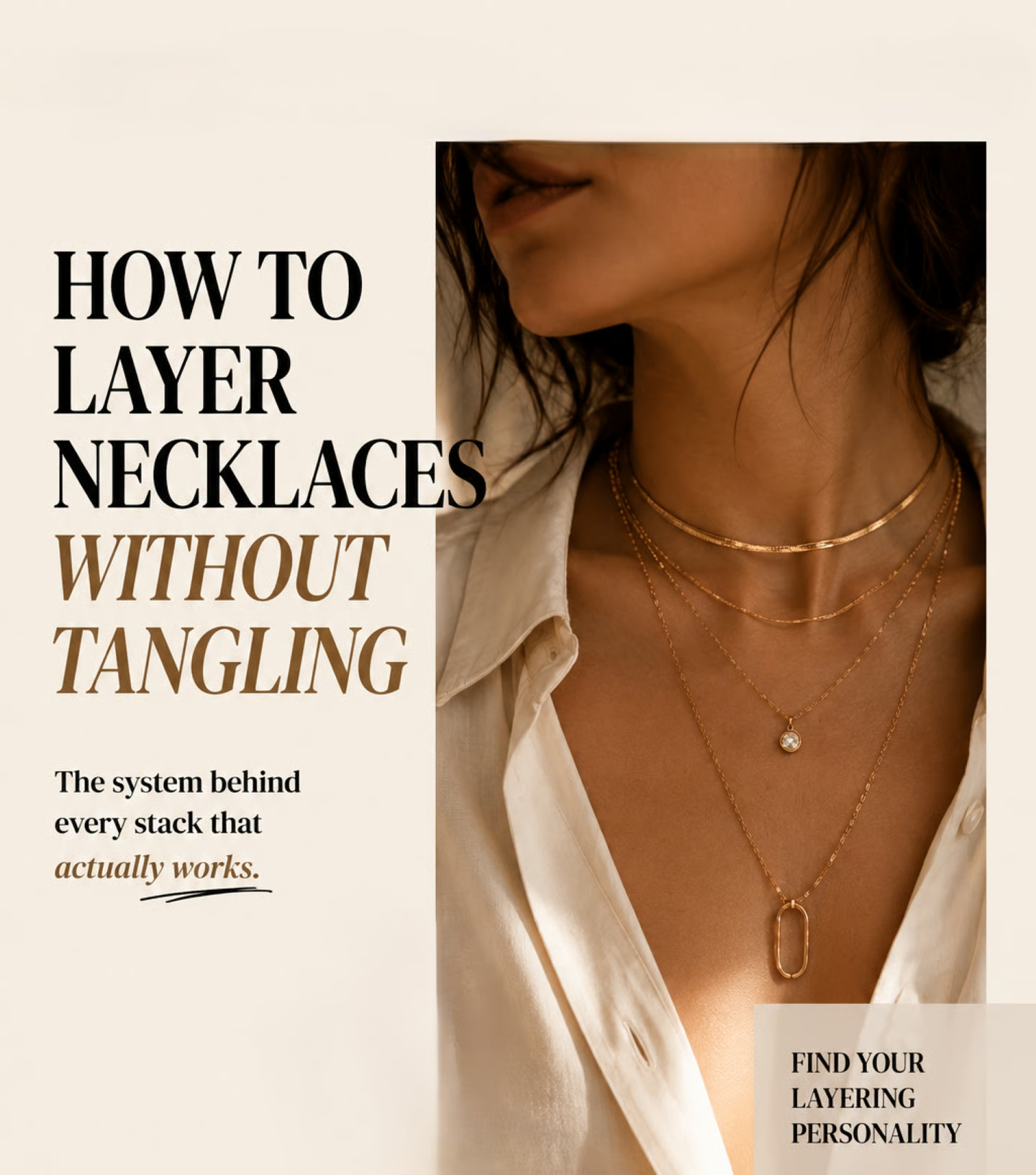
How to layer necklaces comes down to length, spacing, and balance. Start with two or three different lengths, then mix chain styles and pendants without letting one piece overpower the others.
Quick answer: Choose three different lengths (around 16, 20, and 24 inches). Keep the lightest chain closest to your neck, place your main pendant in the middle, and save heavier chains or larger charms for the longest layer.
We’ll cover how to choose the right lengths, build a balanced stack, prevent tangling, and match your necklaces to different necklines.
How to Layer Necklaces Without Tangling: 3 Things to Check
Most tangles have a few simple causes, so check these three things before you add another chain:
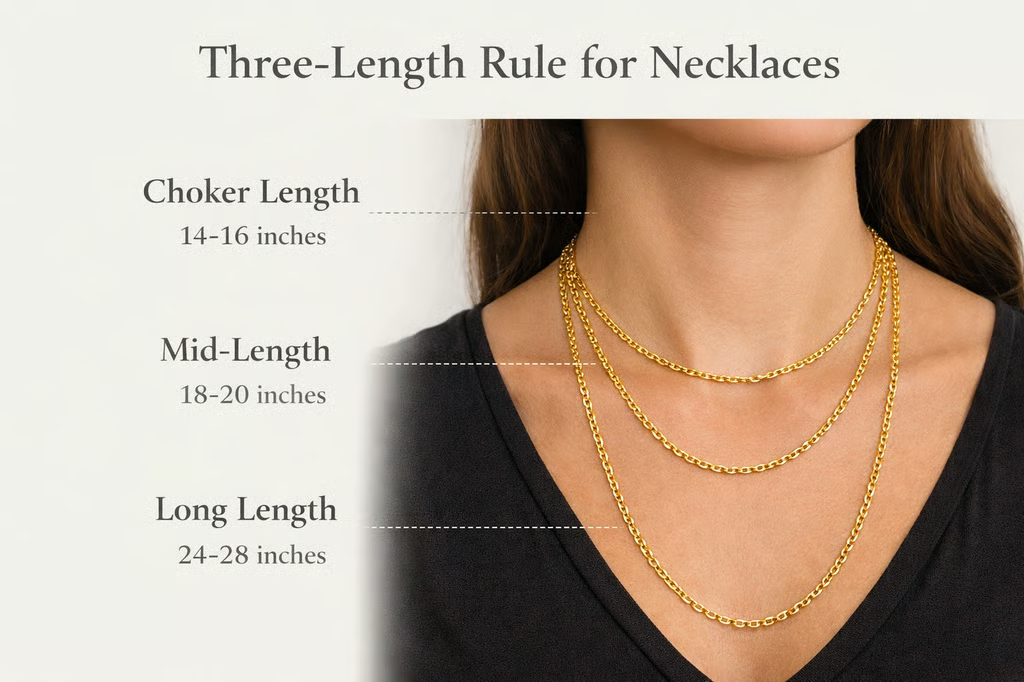
- Separate the lengths: use clearly different lengths, such as 14 to 16 inches, 18 to 20 inches, and 24 to 28 inches.
- Vary the chain weight: avoid putting several heavy or chunky chains together in the same area.
- Give bulky pendants space: keep larger pendants away from the middle of the stack so they do not catch on the chains above them.
When two necklaces sit at nearly the same length, they move through the same space as you walk or turn, which makes them more likely to catch and twist. That is why length is the first thing to get right.
How to Layer Necklaces: The 3-Length Rule
The easiest way to get the lengths right is to think in three zones: short, middle, and long.
| Layer | Length | Best Role |
|---|---|---|
| Short | 14–16 inches | Choker, collar, or simple chain |
| Middle | 18–20 inches | Pendant or focal piece |
| Long | 24–28 inches | Longer chain or heavier statement piece |
Start with three clearly separated lengths. The exact measurements can vary, but each necklace should have enough space to sit in its own zone.
Layer 1: Short (14–16 inches)
Use a simple choker, collar, or thin chain close to the collarbone. Keep this layer relatively light, especially if the layers below have a pendant or heavier chain.
Layer 2: Middle (18–20 inches)
Make this your focal layer, the one your eye goes to first, with a pendant, stone, initial, or other small detail around the center of the chest.
Layer 3: Long (24–28 inches)
Use a longer or slightly heavier chain to add visual weight. This works especially well when the upper two layers are delicate.
Check How Your Necklaces Move
Length creates separation, but movement matters too. Two necklaces can have different lengths and still twist together if both have heavy pendants or textured chains. If a stack keeps tangling, change one piece instead of adding more length.
What If Your Necklaces Are the Same Length?
Necklaces at the same length sit in the same spot, so they overlap and twist. If one has an extender chain, fasten it at a different link so the two sit apart. A layering clasp can also keep them separated at the back of your neck.
How to Stack Necklaces: Build a 3-Necklace Stack in 4 Steps
Once the lengths are set, building the stack only takes a few steps.
- Start with a 16-inch chain close to the collarbone.
- Add an 18–20-inch pendant necklace as the focal layer.
- Add a 24-inch chain to create separation below the pendant.
- Adjust the spacing so each necklace sits in its own area without overlapping.
You don’t need three dramatically different styles. The separation between the lengths does most of the work.
Only want two necklaces? Pair a 16-inch chain with a 20-inch pendant, the same pairing used in the Minimal Stack below. The way you put them on also matters, so that comes next.
How to Keep Layered Necklaces From Tangling When You Put Them On
Tangles often start at the clasp, so a few small habits help.
- Put the shortest necklace on first, then add the middle and longest layers in order.
- Let each chain fall straight before you add the next one.
- Take them off in the opposite order, starting with the longest.
- Store each necklace separately, hung on a hook or laid flat in its own pouch.
Do Layering Clasps and Separators Help?
A layering clasp, also called a necklace separator, joins two or three necklaces at the back of your neck so the clasps stay in place and the chains stay in order. It is optional, but it can help if your clasps keep sliding to the front. Still use different lengths, because a clasp does not fix chains that sit at the same spot.
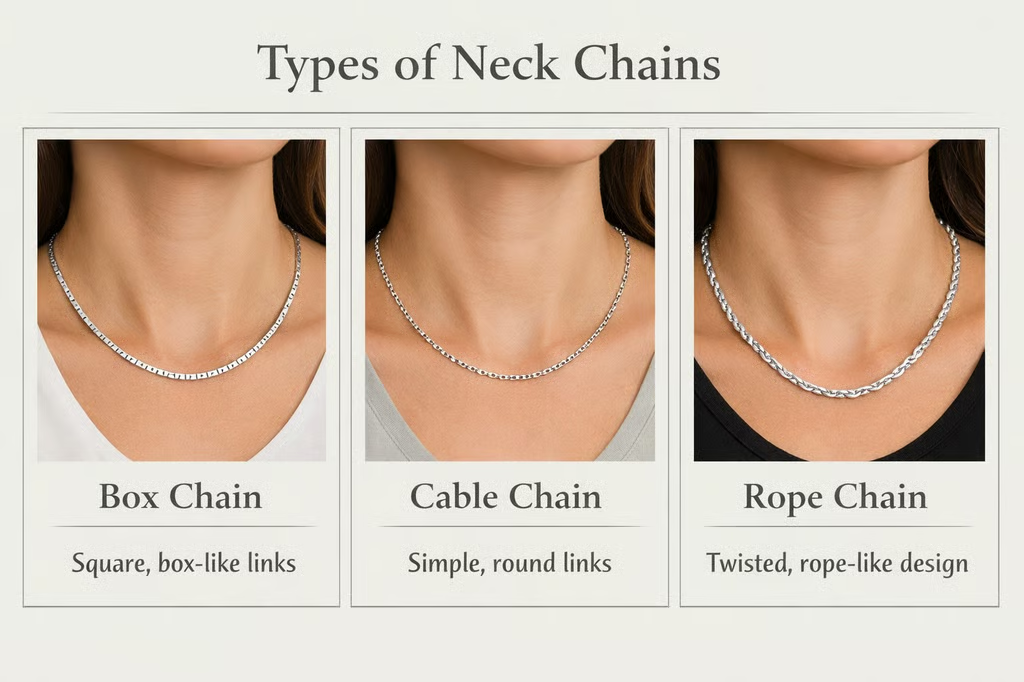
Chain Types That Work Well Together
Length and order do most of the work, but the chains you choose also change how well a stack sits together.
1. Thin Chains Layer Cleanly
Thin box, cable, and fine rope chains are lightweight and sit close to the neck, so they work well when you want pendants and charms to remain the focus.
Different textures can add contrast, but spacing still matters most for preventing tangling.
2. Chunky Chains Need More Space
A thick paperclip chain or bold link can crowd the middle of a stack. If you want to use one, the longest layer is usually the easiest place for it because the heavier chain has more room to stand on its own.
3. Gold and Silver Necklaces Can Be Layered Together
Gold and silver do not have to match. Focus on weight, scale, and placement instead. Similar proportions are easier to balance, while a heavy silver chain paired with a delicate gold chain creates stronger contrast and usually works better with the heavier piece on the longest layer.
4. Put Large Charms on the Longest Layer
A large charm can catch on the chains above it when placed in the middle. Putting it on the longest layer gives it more room and keeps the stack from feeling crowded.
4 Necklace Stacks to Try
Now that you know the rules, here are four stacks you can copy.
1. The Minimal Stack
The Minimal Stack combines a plain dainty gold necklace at choker length with a thin pendant necklace at 20 inches. With just two pieces, it pairs easily with a white shirt, a blazer, or a simple dress.
A simple stack often looks more polished than a pile of trend pieces, which is the same idea behind our guide on how to look expensive on a budget.

2. The Boho Stack
Beaded necklaces at mid-length paired with a longer coin pendant or natural stone chain create a stack with texture and depth. The contrast between the beads and metal keeps the combination interesting.
This combination pairs especially well with linen shirts, relaxed dresses, and oversized tees.

3. The Statement Stack
A thin choker paired with a charm necklace at 18 inches and a bold layered chain at 24 inches creates a stack that takes up space intentionally.
Charm necklace layering works best when the charm has room to stand out. Keep the neckline simple so the necklaces remain the focal point.

4. The Everyday Stack
This combination uses a plain 16-inch chain and a simple 18-inch pendant. It works with almost any outfit and requires very little thought to style. It also works well with work outfits, especially when you want to add a little personality without making the look feel overdone.

How to Wear Layered Necklaces With Different Necklines
A stack can look completely different depending on what you are wearing, so the last step is matching it to your neckline. Your neckline matters almost as much as the lengths you choose. A small set of versatile basics also makes accessories easier to style, which is the same idea behind our minimalist wardrobe essentials guide.
1. V-Neck
A 20-inch pendant follows the V-shape naturally, while a choker fills the space above it. Keep the two lengths clearly separated to avoid bunching.
2. Crew Neck
Longer necklaces usually work best with a crew neck because a 24-inch chain clears the neckline and gives the stack more room. If you add a choker, keep the rest of the combination simple so the area around the neckline doesn’t feel crowded.
3. Off-Shoulder Neckline
Choose shorter necklaces, such as a choker or collar necklace, so the jewelry sits above the neckline and becomes the focal point.
4. Scoop Neck
Scoop necklines are often the most forgiving option for stacked necklaces. The 3-length rule works particularly well here because you can start with a choker and build downward. The open neckline also gives each layer enough visual space without making the stack feel crowded.
Whatever the neckline, start with the simplest stack, check that each necklace has its own space, and add a third piece only when the first two sit well together.
FAQ
How do you layer necklaces?
Use three clearly different lengths, about 16, 20, and 24 inches. Keep the lightest chain closest to your neck, put the main pendant in the middle, and place any heavy chain or large charm on the longest layer.
How do you keep layered necklaces from tangling?
Use clearly separated lengths so the chains don’t occupy the same space. The 3-length rule works well: 14–16 inches, 18–20 inches, and 24–28 inches. Thin chains can also help reduce catching and tangling. The same idea works when you wear just two necklaces: give each one its own length.
How many necklaces should you layer at once?
Three is a good starting point for most stacks: one choker, one mid-length pendant, and one longer chain. You can wear more, but the pieces need enough variation in length and size to keep the stack from looking crowded.
Can you mix gold and silver necklaces?
Yes, what matters is that the weight and scale of the pieces balance each other. They don’t need to match perfectly.
What Order Should You Layer Necklaces In?
Start with the shortest necklace and work your way up to the longest. This creates a graduated look, gives each chain room to stand out, and helps prevent the necklaces from sitting directly on top of one another.
How Do You Store Layered Necklaces Without Tangling?
To keep your necklaces from tangling, give each one its own space. You can hang them separately on hooks or lay them flat in individual pouches.