

Building an affordable capsule wardrobe means spending more where durability and fit matter, and spending less where a lower price won’t compromise how the piece performs.
A practical starting point is to put more of your budget toward high-wear, harder-to-replace pieces such as a coat, boots, or blazer, while keeping basics, seasonal items, and trend-led pieces at a lower price point.
Building your fall capsule? Start with the Fall Capsule Wardrobe guide to see how the pieces work together, then use the Fall Capsule Wardrobe Checklist as your shopping list.
What "Affordable" Actually Means for a Capsule Wardrobe
An affordable capsule wardrobe starts with deciding which purchases deserve most of your budget before you shop: more on the pieces you’ll wear constantly, less on items that are seasonal, occasional, or easy to replace.
A common mistake with a cheap capsule wardrobe is treating every item as if it deserves the same budget. A coat that wears out quickly can cost more over time than a slightly pricier one that lasts several seasons.
The Cost-Per-Wear Rule Nobody Explains
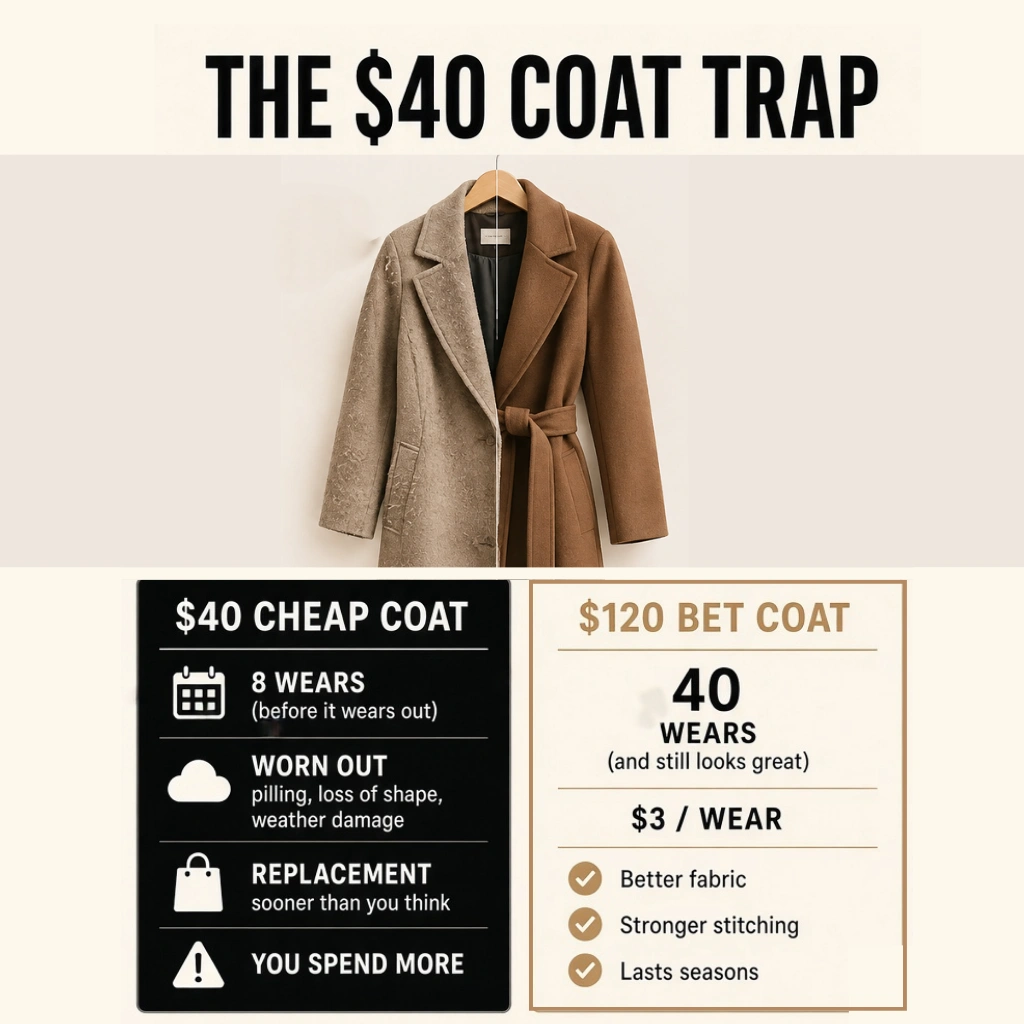
Cost-per-wear is a simple way to see whether you’re actually getting value from a piece of clothing. You take the price of the item and divide it by how many times you’ll wear it.
The simple formula
Cost per wear = Item price ÷ Number of wears
For example, a $120 coat worn 40 times costs $3 per wear. A $40 coat worn only 8 times before it wears out costs $5 per wear, even though you paid less upfront.
| Item | Price | Times worn | Cost per wear |
|---|---|---|---|
| Coat | $120 | 40 wears | $3 per wear |
| Blazer | $40 | 8 wears | $5 per wear |
| Basic tee | $12 | 50 wears | $0.24 per wear |
| Statement top | $45 | 3 wears | $15 per wear |
The same logic applies to smaller pieces. A $12 basic tee worn 50 times over two years costs just $0.24 per wear, while a $45 statement top worn three times before you stop reaching for it costs $15 per wear.
Before comparing the price tags, compare the number of wears.
A higher-priced piece can sometimes cost less in the long run if you wear it often and keep it for longer.
Where to Spend More on a Cheap Capsule Wardrobe
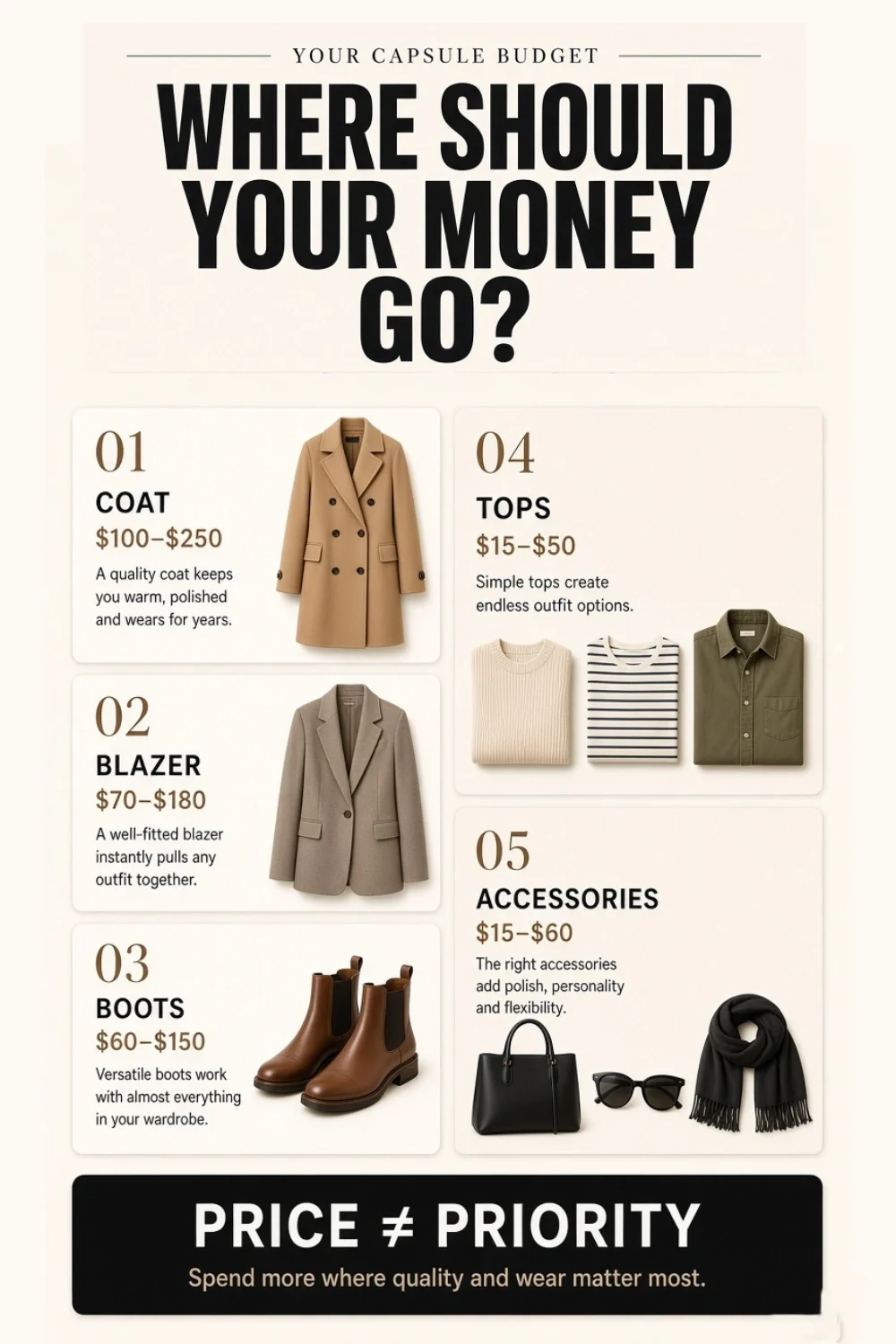
Some pieces are simply harder to buy cheaply without sacrificing durability or fit. These are the items where spending a little more can make sense when you’ll wear them frequently.
01. Your coat
Lower-quality fabric and construction tend to show wear quickly here, especially through pilling, loss of shape, or weather damage. Before buying, check the fabric composition, lining, and overall construction rather than assuming a higher price automatically means better quality.
02. Your everyday boots
Constant friction and weather exposure wear down low-quality materials quickly. Check the sole material and stitching, not just the leather’s appearance.
03. One structured blazer
Fit usually matters more than the label. Poor shoulder seams, thin fabric, or a lining that pulls can make even a simple outfit look less polished.
These pieces take the most wear and are harder to disguise when the construction is poor. For the rest of the capsule, you can be much more flexible about price.
Where You Can Genuinely Save
Other pieces don’t need the same investment.
01. Basic tees and knit tops
You can often spend less here if the fabric, fit, and construction hold up after washing.
02. Trend-adjacent pieces
If you already expect to replace something next season, there’s little reason to give it a premium share of your capsule budget.
These can often take a smaller share of the budget, especially if you rotate them. For a bag you use daily, though, durability still matters more than the price category suggests.
What to Check Before Buying a "Cheap" Piece
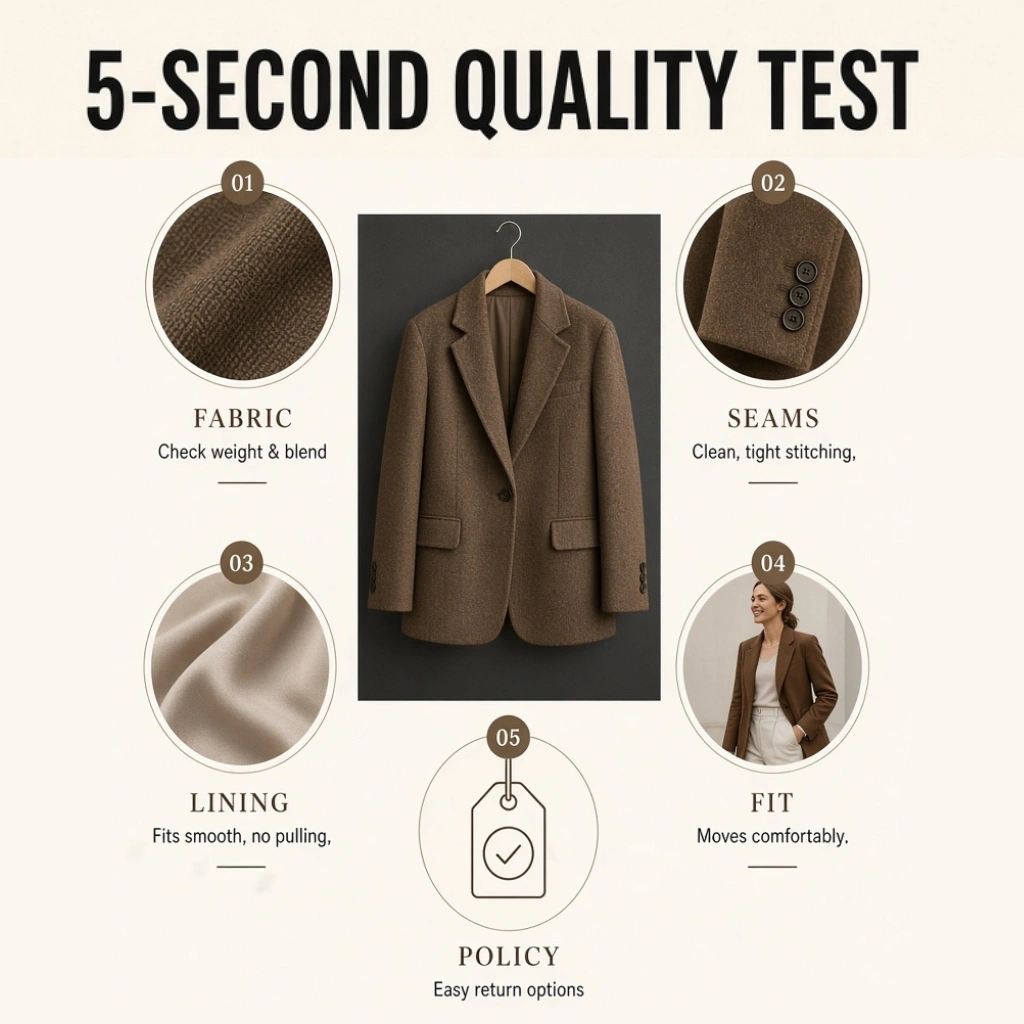
Price alone doesn’t tell you whether something is a good buy. Before paying less for a capsule piece, a few quick checks can tell you whether you’re actually getting good value.
Quick Quality Check
☐ Fabric composition
Check the fiber blend and fabric weight rather than assuming a higher price means better quality.
☐ Seams and stitching
Even, secure stitching is a good sign. Loose threads, uneven seams, or skipped stitches are worth a closer look.
☐ Lining
On coats, blazers, and other structured pieces, check that the lining sits smoothly and doesn’t pull when you move.
☐ Fit and movement
Try moving your arms, sitting, and walking in the piece before deciding. A good price means little if the garment doesn’t move comfortably with you.
☐ Return policy
If you’re unsure about quality, buying somewhere with an easy return gives you room to inspect and test the piece at home.
Quick answer
When buying an inexpensive capsule piece, check the fabric composition, stitching, lining, fit, and return policy before deciding whether the price is actually a bargain.
Use the fitting room to test the garment, not just look at it. Move, sit, walk, and check whether the fabric and fit still feel right.
How to Shop Smart Without Overspending
Coats and boots are often easier to find at a discount during end-of-season sales. If you already know what you need for next year, those sales can be a better time to buy than waiting until the first cold-weather rush.
Resist buying a full outfit in one trip. Build the capsule over a few weeks, checking what you already own against the checklist before adding anything new. This avoids duplicate purchases and impulse buys.
Give yourself a little time before buying a trend-led piece. If you can’t name at least two or three outfits you’d actually wear it with, leave it for now.
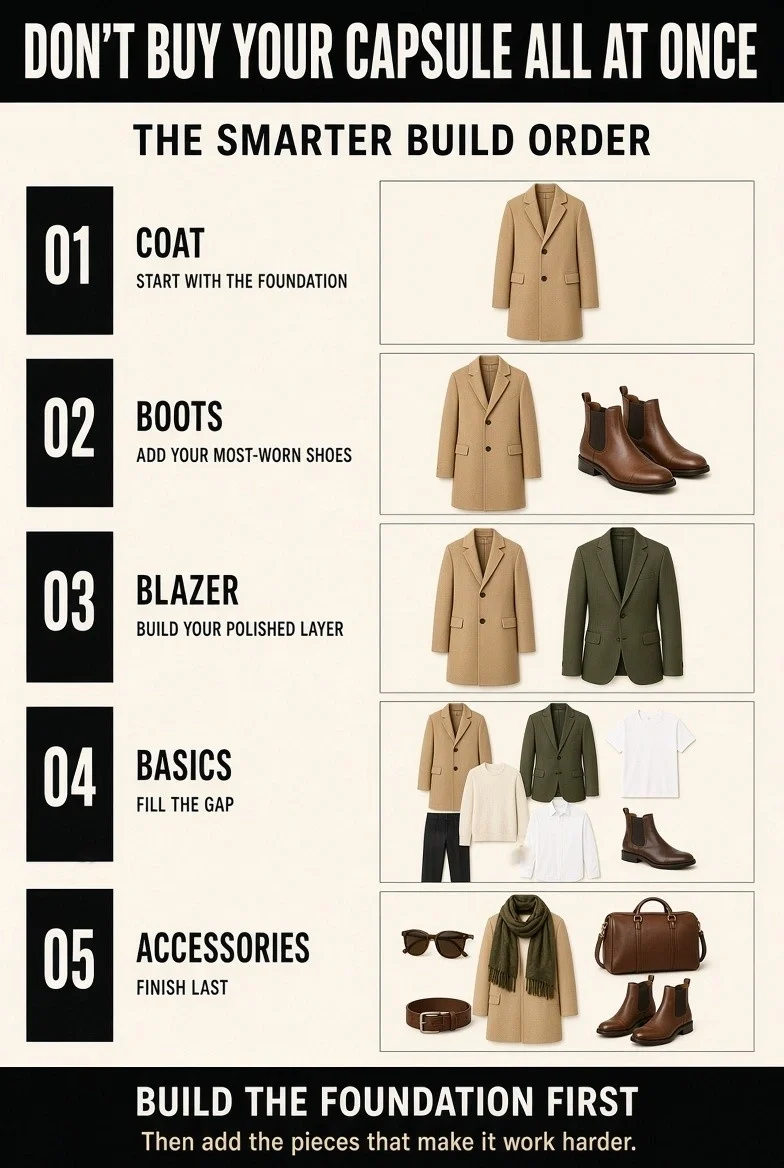
How to Divide Your Capsule Wardrobe Budget
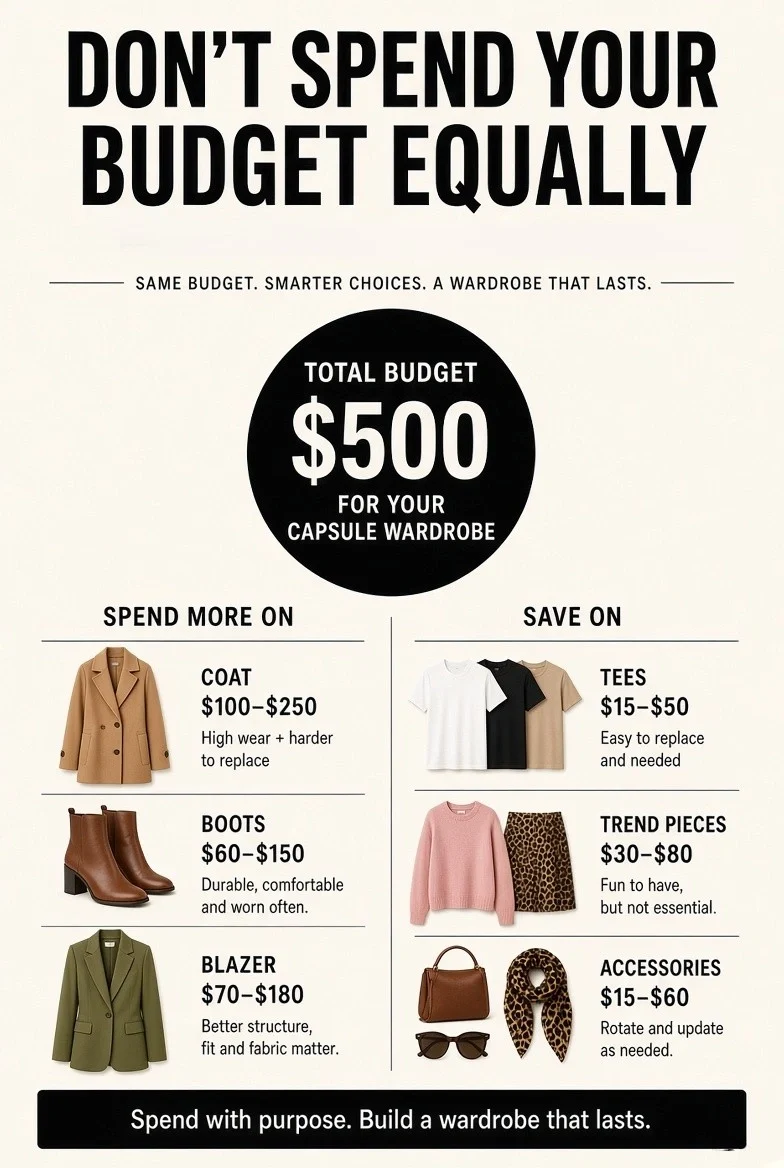
Exact prices vary by brand, sale timing, and location, but here’s a realistic planning range:
| Capsule piece | Planning range | Prioritize |
|---|---|---|
| Coat | $100–$250 | Fabric + construction |
| Structured blazer | $70–$180 | Shoulder fit + structure |
| Everyday boots | $60–$150 | Sole + material quality |
| Tops and basics | $15–$50 | Fit + fabric composition |
| Accessories | $15–$60 | How often you’ll use them |
Treat these as planning ranges, not fixed prices. Sales and materials will shift the actual cost.
If your total budget is smaller, don’t try to buy every category at once. Start with the pieces that solve your biggest wardrobe need, then add the rest as your budget allows. What matters is the proportion of your budget going toward each category, not matching these exact figures.
FAQ - Affordable Capsule Wardrobe Questions
Is a capsule wardrobe actually cheaper than buying clothes as needed?
It can be, but only if you stop buying pieces just because they’re on a capsule checklist. A smaller wardrobe doesn’t save money if you’re constantly replacing items or buying things you rarely wear.
Should I buy secondhand for an affordable capsule wardrobe?
Yes, secondhand can be especially useful for coats, blazers, and other higher-cost pieces. Check the fabric composition, lining, seams, and signs of wear before buying rather than judging the item by brand alone.
How do I know if a piece is worth the higher price?
Ask how often you’ll wear it, how difficult the piece is to replace, and whether better construction will actually make a difference. If all three matter, spending more may be worthwhile.