
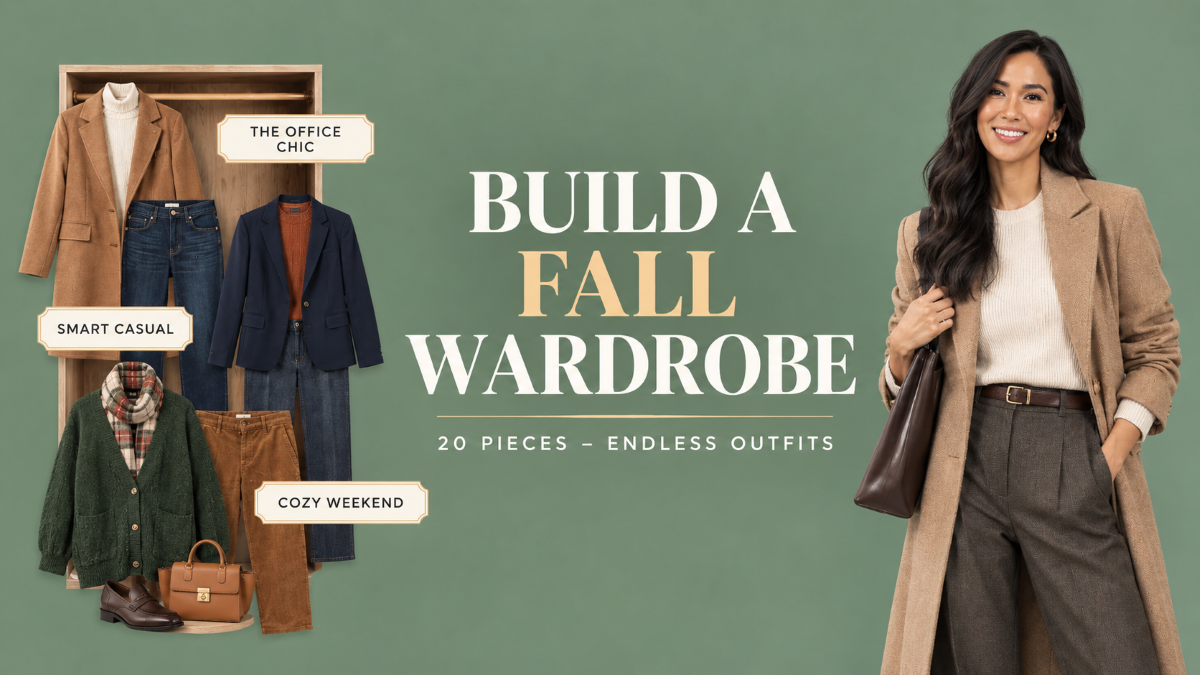
You stand in front of a closet that is, by any measure, full. Still, ten minutes before you need to leave, you’re back to the same three pieces you already know will work. The problem isn’t that you don’t have enough clothes. It’s that the pieces you own don’t really fit the way you spend your days. A fall capsule wardrobe should make getting dressed easier, not give you another list of clothes you “need” to own.
Here, you’ll see how to choose versatile fall capsule wardrobe essentials that fit your lifestyle, adapt to changing weather, and fill genuine gaps before you buy anything new.
What a Capsule Wardrobe for Fall Really Is
A capsule wardrobe for fall is a curated set of pieces that can handle changing autumn weather and days when the same outfit has to work from morning errands to dinner.
The important part isn’t hitting a certain number of pieces. It’s making sure the pieces can work together and earn enough wear to justify the space they take up.
That might mean a blazer and tailored trousers if you’re in an office most days. It could mean soft knitwear, denim, and a practical jacket if your week is mostly casual. Someone else might need polished layers for school runs, dinners, and appointments. The capsule changes because the life changes.
The Problem With One-Size-Fits-All Capsule Lists
If you search for “fall capsule wardrobe,” you’ll find the same formula everywhere: white tee, dark denim, camel coat, and neutral palette. It photographs well, but it doesn’t account for the fact that people actually dress for very different lives.
When the Checklist Doesn’t Match Your Life
That’s usually where the capsule starts to fall apart. You bought the pieces because they looked right together, but they don’t solve the situations you actually dress for.
A blazer doesn’t become an essential just because it’s on every checklist. If you work from home and rarely dress formally, it may sit untouched while the cardigan you already own gets worn three times a week. The same goes for color. A capsule doesn’t have to be beige to be versatile, and you don’t need to replace half your wardrobe every September to make it work.
Start With Your Week
Look at where you actually go, what you repeatedly wear, what the weather requires, and which pieces already make getting dressed easier. That gives you a much better starting point than copying someone else list.
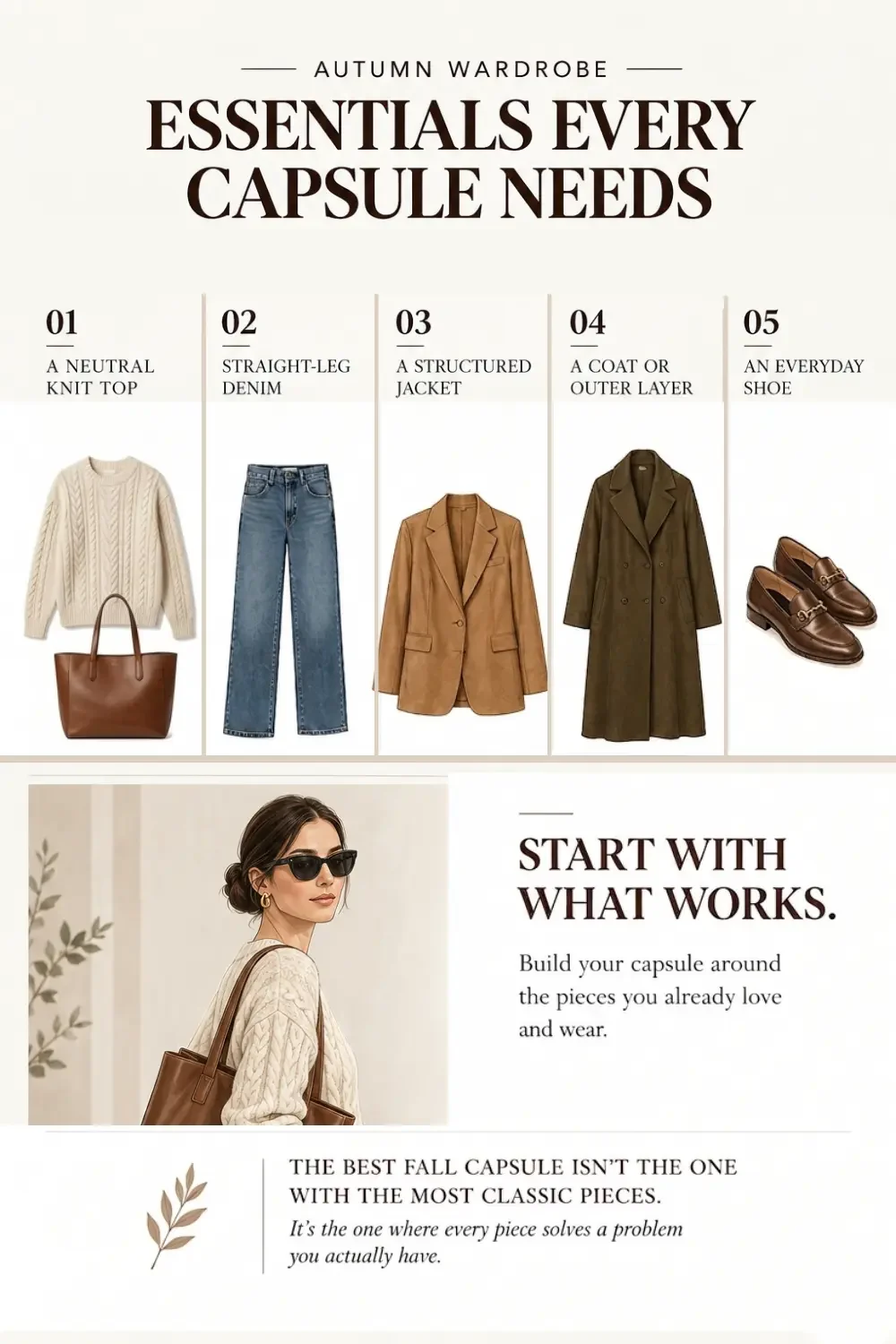
Autumn Wardrobe Essentials: The Pieces Every Fall Capsule Needs
Here, you’ll see how to choose the right foundation pieces for your fall wardrobe, adapt them to your lifestyle, and spot the gaps worth filling before you buy anything new.
| Essential Piece | What It Should Do |
|---|---|
| Neutral knit top | Layer under jackets or wear on its own. |
| Straight-leg denim | Choose a mid or dark-wash pair that works with different tops and shoes. |
| Structured jacket or Blazer | Add polish to simple everyday outfits. |
| Coat or Outer layer | Provide weather protection while working with most of your wardrobe. |
| Everyday shoes | Choose a pair you genuinely wear, such as ankle boots, loafers, or sneakers. |
Think of these fall essentials as starting points rather than rules. For example, if you live somewhere with mild fall weather, a heavy wool coat may be unnecessary; a lighter jacket could do the job. If you’re on your feet most of the day, comfortable shoes will probably matter more than having a second polished pair.
A useful fall capsule isn’t necessarily the one with the most classic pieces. It’s the one where the pieces mix and match easily while solving the problems you actually have.
If you’re building beyond the fall season, these same principles can help you decide which pieces deserve a place in your year-round closet. Our [Minimalist Wardrobe Essentials] guide goes deeper into the core pieces worth owning regardless of season.
How a Capsule Wardrobe for Fall Differs From Other Seasons
A capsule wardrobe for fall has to deal with changing temperatures in a way summer and winter wardrobes often don’t. Mornings can be cold, afternoons warmer, and the same outfit may need to work through both.
That makes layering especially useful. A summer capsule can rely more heavily on lightweight pieces worn on their own, while a winter capsule is built around warmth. Fall needs the middle ground: a cardigan, light jacket, scarf, or other layer that can be added or removed without changing the entire outfit.
Because of that, the most useful fall pieces aren’t always the most noticeable ones. A good layering piece can turn several outfits into something that works across a much wider range of temperatures.
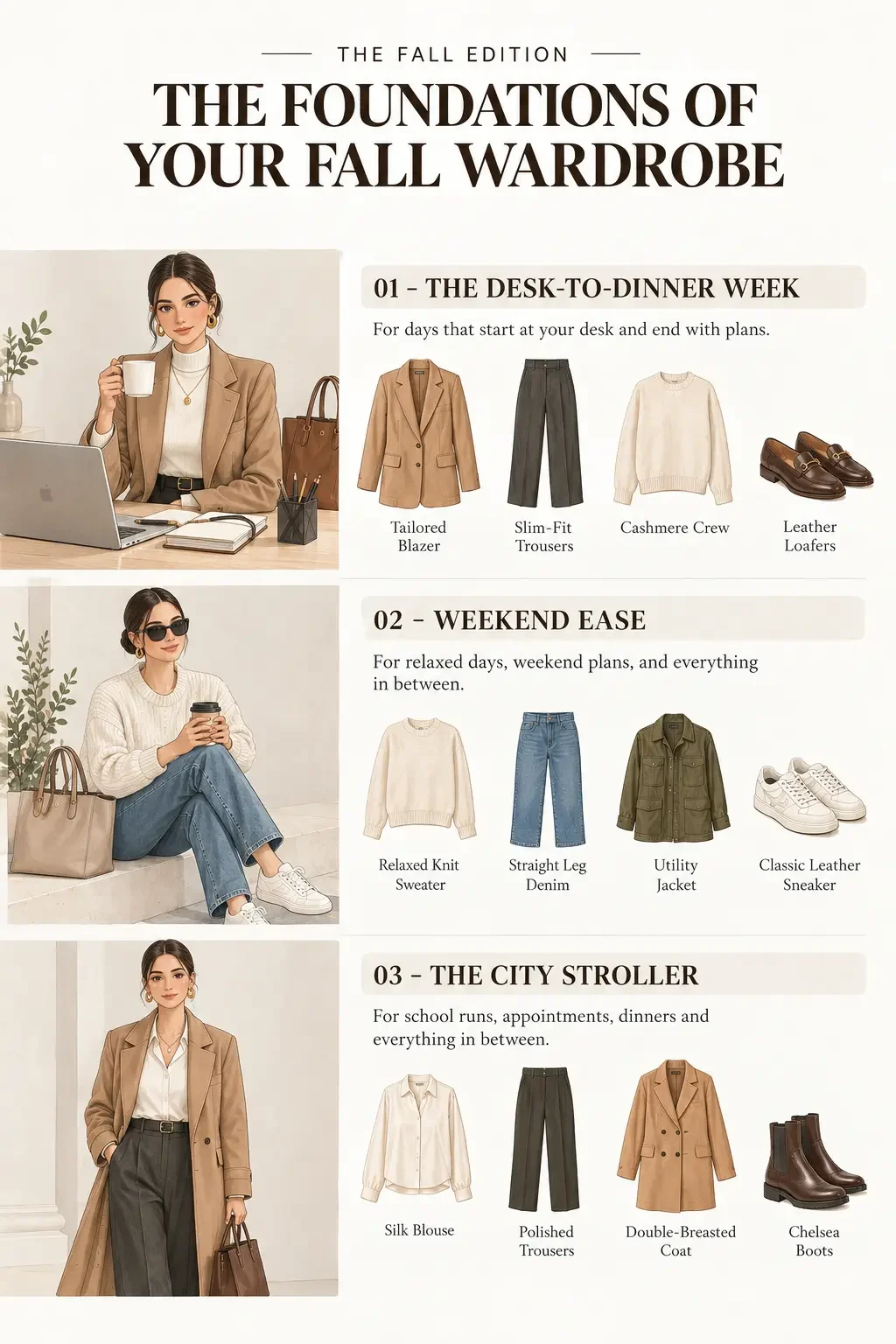
Building Your Capsule Wardrobe for Fall: Three Lifestyle Variants
| Your Lifestyle | Prioritize | Consider Skipping |
|---|---|---|
| Mostly Office | Tailored trousers, Blazer, Polished tops | Extra casual layers |
| Mostly Casual | Knitwear, Denim, Comfortable jacket | Formal blazer |
| Love Color | 2–3 versatile basics + Your favorite colors | Large neutral-only wardrobe |
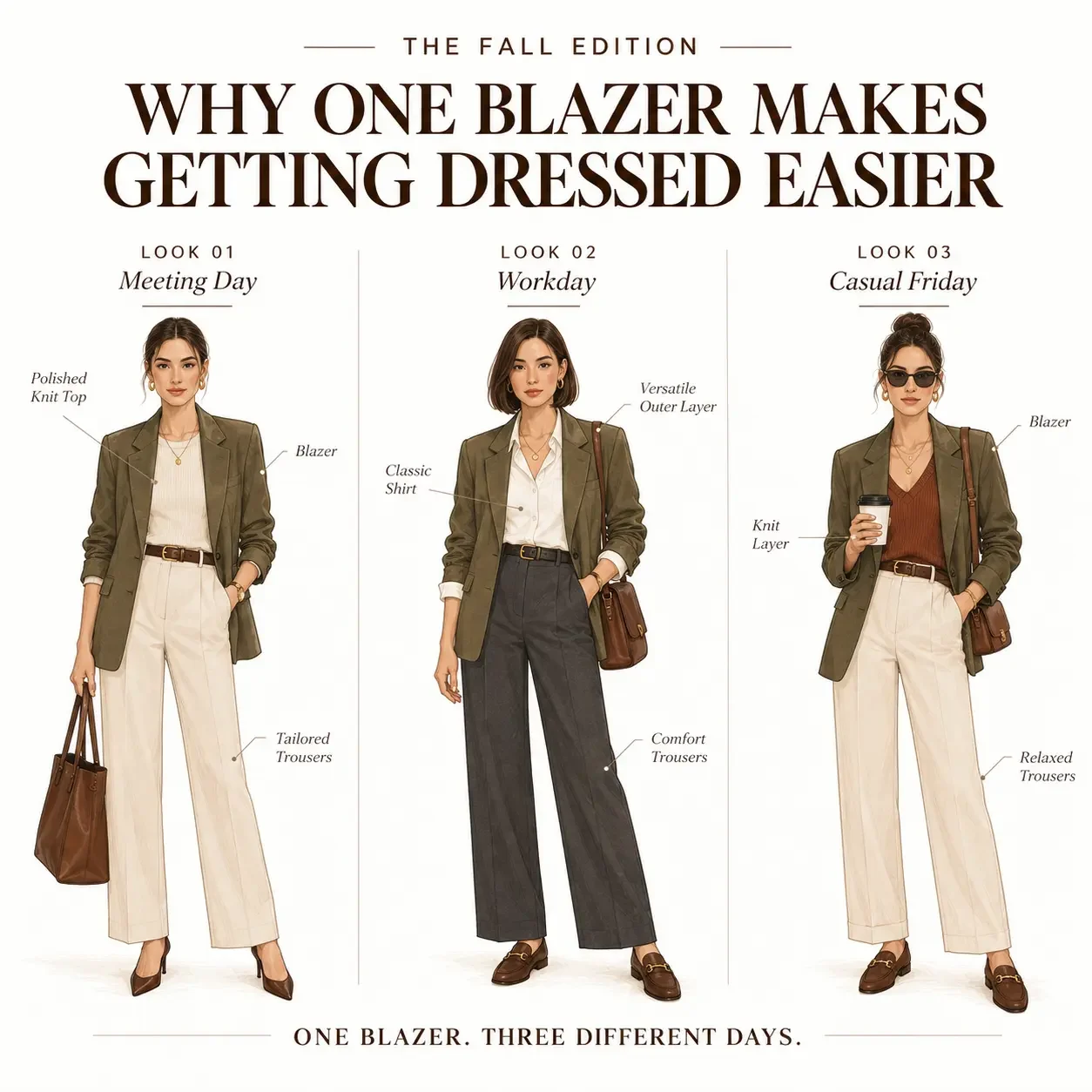
If Your Fall Is Mostly Office
Prioritize tailored trousers, a blazer, and 2-3 polished tops that layer easily underneath. Your outer layer should work with most of those pieces, so you’re not rebuilding an outfit every morning.
If your workplace is fairly casual, don’t automatically fill the capsule with formal wear. One good blazer may be enough. Add knitwear or relaxed trousers if those are the pieces you actually reach for during the week.
Skip the second denim jacket if your workweek rarely gives you a reason to wear it. Instead, look for pieces that can change the feel of an outfit without requiring a completely different wardrobe. The same blazer might work with tailored trousers for a meeting and jeans on a more relaxed day. That kind of flexibility is what earns a piece its place.
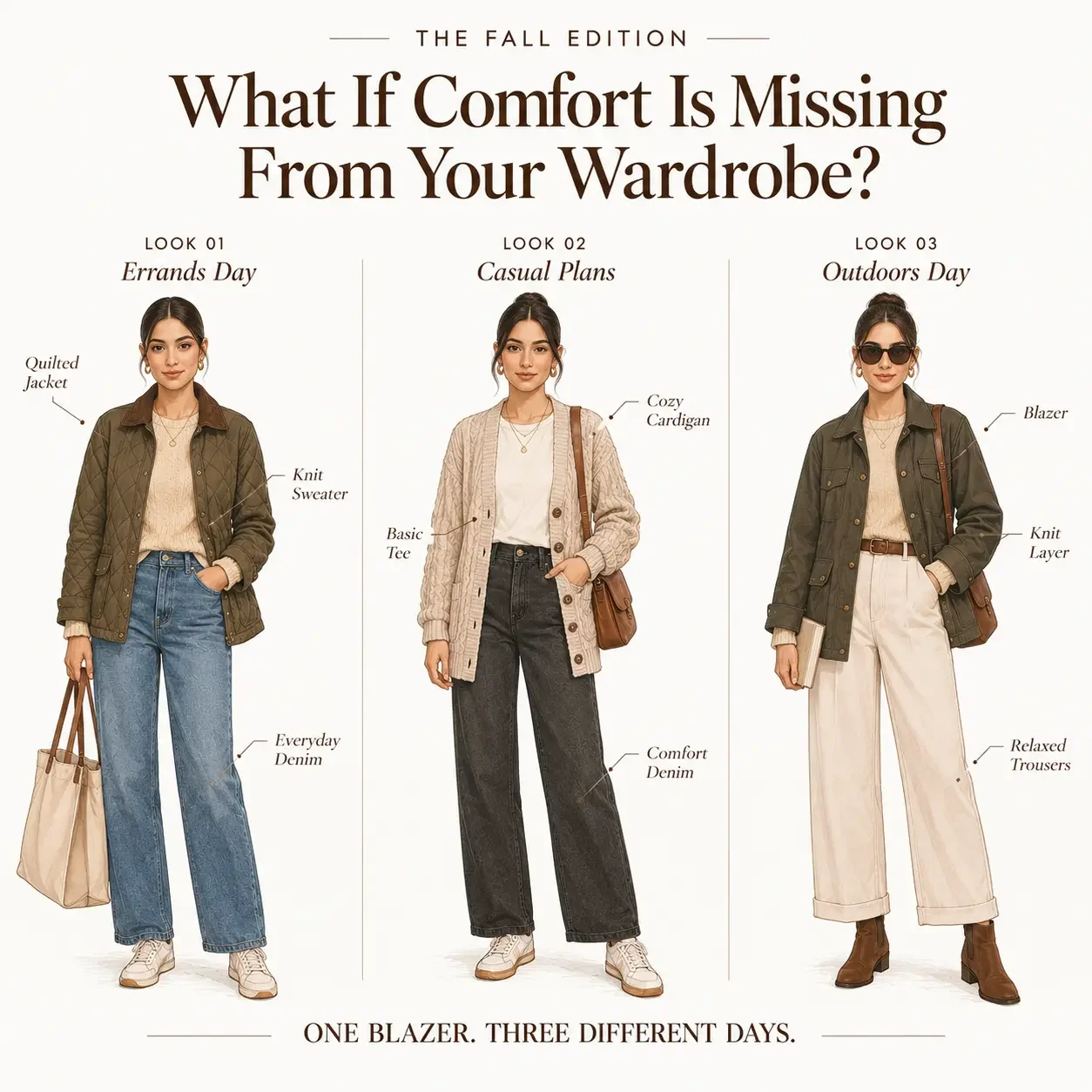
If Your Fall Is Mostly Casual
Lean into knitwear and denim. A quilted or waxed jacket may do more work here than a structured coat, especially if most of your days involve errands, casual plans, or being outdoors.
Trade the blazer for a cardigan you’ll actually put on. Then choose one everyday shoe that works with most of your jeans and trousers.
Comfort matters here, too. If getting dressed usually means comfort first, there is little point building a capsule around shoes or clothes you only tolerate for an hour. A common mistake is buying a “smart casual” piece that looks useful on paper but doesn’t fit into your real routine. If you keep choosing something else instead, the piece probably wasn’t filling a real gap.
If You Love Color
Keep your neutral color palette focused rather than large. 2-3 dependable pieces can be enough to give the rest of the wardrobe room to have personality.
From there, build around one or two colors you already gravitate toward. Maybe that’s burgundy and olive, chocolate and red, or a brighter shade that you wear every year. The capsule logic still works. You just have to make sure the colors can connect with enough of the wardrobe to create multiple outfits. Your capsule doesn’t have to be beige to be practical.
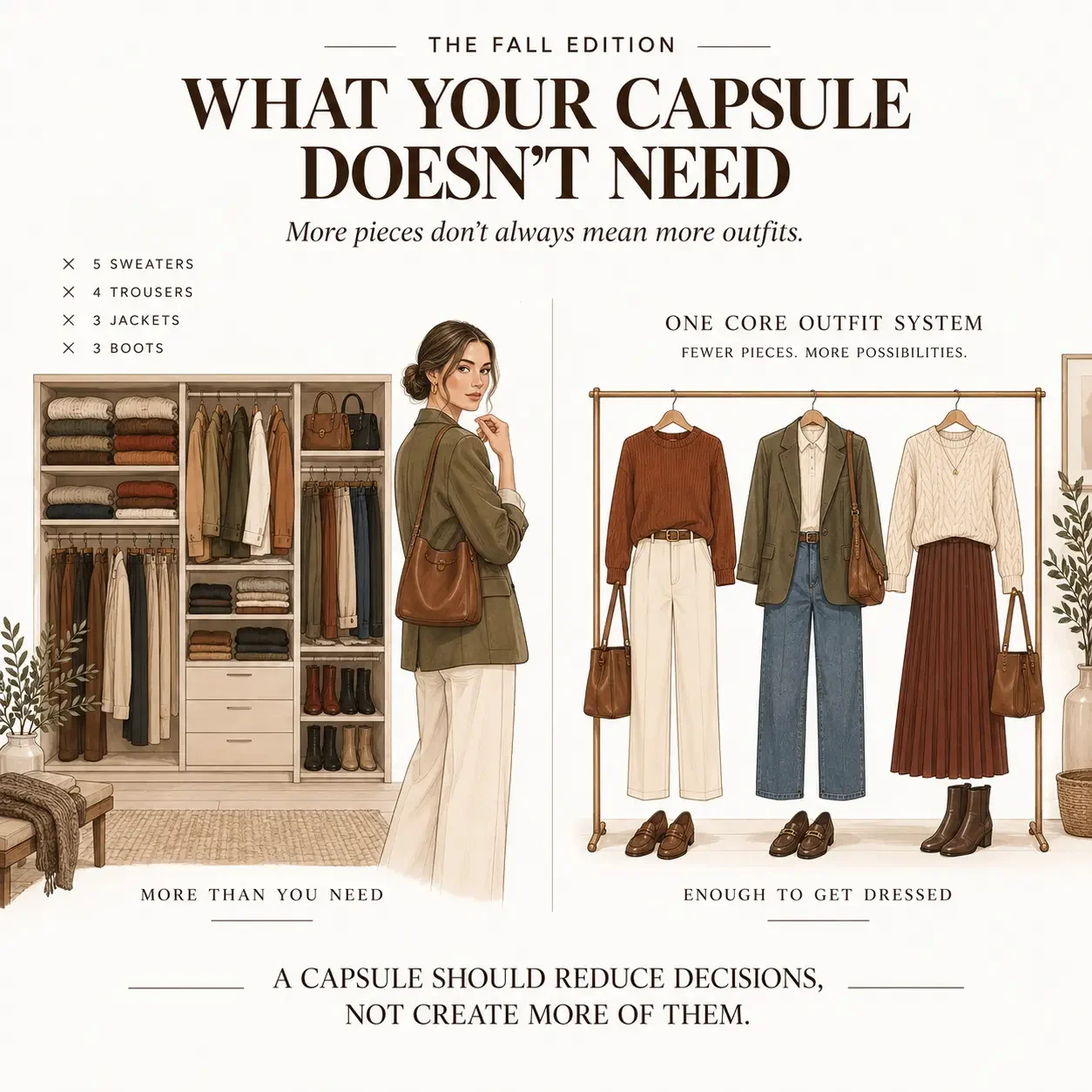
How to Decide What Not to Buy
1. Trend Pieces vs. Well-Made Blazer
This is where trend pieces often lose. A statement coat from a seasonal trend roundup might look great, but if it only works with one outfit, it probably doesn’t belong in the core of your capsule. Compare that with a well-made blazer: less exciting, perhaps, but useful with jeans, trousers, dresses, and layers you already own. The less exciting piece may end up being the one you wear far more. The best fall must haves are the pieces that solve a real wardrobe need and work with what you already own.
2. Duplicates – Denim Jacket / Sweaters
The same applies to duplicates. If you already have a denim jacket you love, buying another one because it’s considered a fall essential doesn’t give you much more outfit flexibility. The same goes for owning three similar neutral sweaters when what you’re actually missing is a useful outer layer. Look for gaps, not categories.
3. Fix What’s Missing
If you’re missing a useful outer layer, buying another sweater won’t solve the problem. If your shoes don’t work with most of your wardrobe, another pair of trousers probably won’t either. The goal is to identify what is actually making your existing outfits harder to wear, then shop for that specific need.
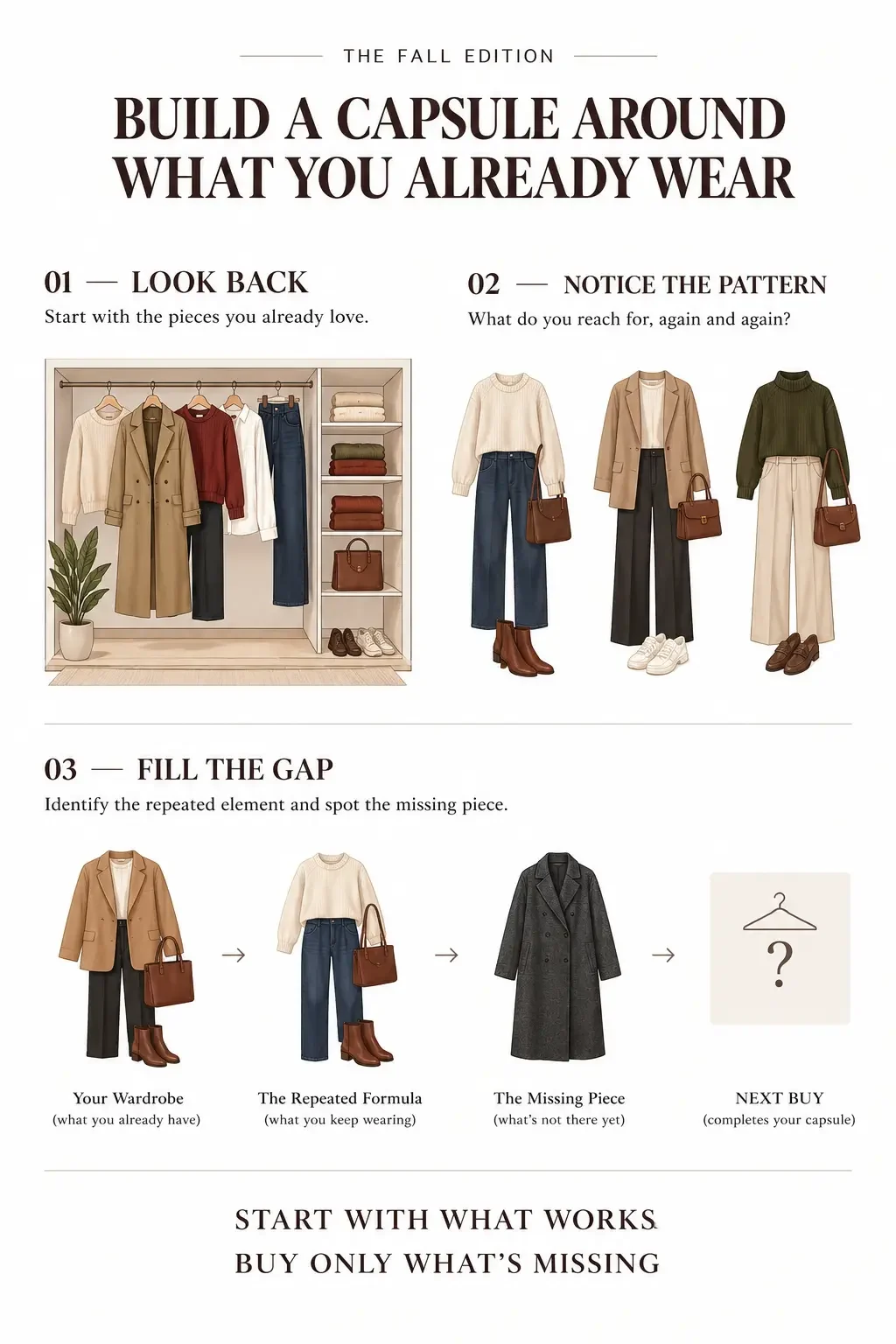
Build Around What You Already Wear
1. Look at What You Wore Most
Before shopping, pull out the pieces you wore most last fall and notice which ones you’re reaching for again as the weather cools down. Maybe it’s straight-leg jeans over wide-leg trousers, a cardigan instead of a blazer, or the same pair of boots with a simple knit.
2. Notice Your Patterns
Those choices tell you more about which wardrobe staples genuinely work for you than a generic capsule checklist does. If you keep reaching for the same silhouettes, layers, or shoes, pay attention to that pattern. It shows you what already works in your routine and gives you a better starting point than buying pieces you think you’re supposed to wear.
3. Fill the Genuine Gaps
If five outfits work but all of them depend on the same jacket, that’s probably where your next purchase should go. Look for the piece that would make more of what you already own work harder, rather than adding another item to a category you already have covered.
FAQ: Common Fall Capsule Wardrobe Questions
How many pieces should a fall capsule wardrobe have?
There isn’t one perfect number, but 15 to 25 pieces is a useful range for many people. The right number depends on your lifestyle, how often you do laundry, and how much outfit variety you actually need.
Do I need to buy everything new?
No, start by matching what you already own against your lifestyle variant above. You may already have many of the foundation pieces, which means you only need to fill the gaps.
How much should I budget for a fall capsule wardrobe?
It depends on what you already own and which pieces you’re actually missing. There’s no need to replace a working wardrobe just to create a capsule. Start by filling the genuine gaps, then decide where it’s worth spending more and where you can save.
What if I don't wear neutrals?
The structure still works. Keep two or three versatile basics for layering, then build the rest around the colors you already wear.
How is this different from a minimalist wardrobe?
A capsule wardrobe is usually built around a specific season or purpose. A minimalist wardrobe is a broader approach to owning less and being more intentional about what stays in your closet.
The Real Point of a Capsule
The goal was never fewer clothes. It was fewer decisions that don’t fit your life. A good fall capsule wardrobe should make your existing wardrobe easier to use. You shouldn’t have to become a different person to wear it.
Before buying anything new, look at a normal week and notice what you actually need to get dressed for. If a piece doesn’t make one of those situations easier, it probably doesn’t need to be part of the capsule. And if you already have something that does the job, keep wearing it.
Ready to Build Yours?
If you’d rather start with a ready-made list, the [Fall Capsule Wardrobe Checklist] turns this framework into a practical shopping guide.
And if you’re trying to build your capsule without overspending, [The Affordable Capsule Wardrobe] breaks down where it’s worth spending more and where you can save.