

Healthy morning habits don’t have to mean waking up earlier or following a long routine. If your mornings are already busy, the better approach is to choose a few small habits that fit into the time you actually have.
This guide focuses on five simple habits you can add without rebuilding your entire morning, plus practical ways to make them easier to repeat when the day gets hectic.
What You’ll Find in This Guide
Why Healthy Morning Habits Work Better When They’re Easy
Most habit advice sounds great when you have plenty of time and energy. Real mornings are different. You may be tired, checking messages, getting ready for work, or already thinking about everything on your to-do list.
That’s why making a habit easy to start matters more than creating a long morning routine.
One useful approach is habit stacking, which means attaching a new habit to something you already do automatically. You could stretch while your coffee brews, open the curtains as soon as you get up, or write one sentence after brushing your teeth.
The less you have to remember or decide, the easier it is to repeat.If you want to turn these individual habits into a complete morning routine for busy women, start with the full routine here.
5 Healthy Morning Habits That Take Less Time
You don’t need an hour-long routine to have a better morning. These healthy morning habits are intentionally small, so you can fit them around the routine you already have.

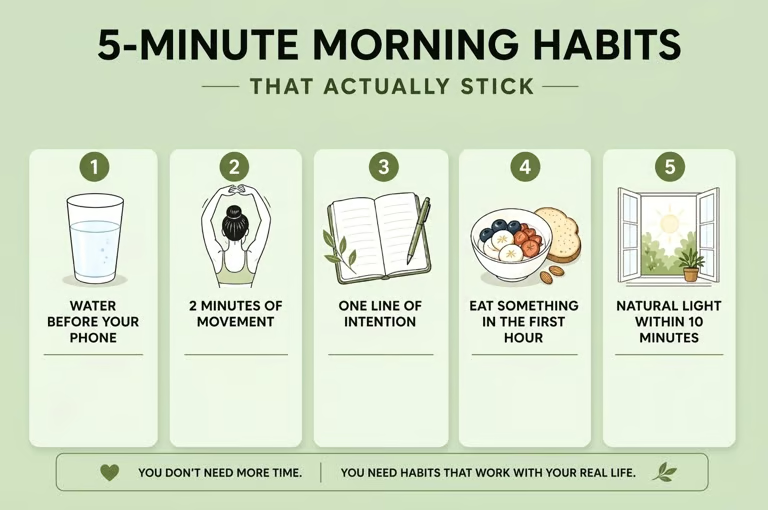
1. Water before your phone
Before you check notifications or open social media, drink a glass of water. Keep a bottle beside your bed the night before so you don’t have to think about it in the morning.
Make it easier: Keep the bottle where you can reach it as soon as you wake up.

2. Move for Two Minutes
Morning movement doesn’t have to mean a workout.
Stretch your arms, roll your shoulders, walk around your room, or do a few gentle movements while your coffee brews.
Try this:
- Stretch while the coffee brews
- Roll your shoulders while you wait
- Walk around the house before sitting down
These are simple micro habits examples because they fit into something you’re already doing rather than asking you to find a separate workout block.

3. Write One Line Before Your To-Do List
You don’t need to write a full journal entry every morning. Before jumping into your to-do list, write one thing you want to feel by the end of the day. It could be calm, focused, present, productive, or simply less rushed.
This takes about a minute, but it creates a small pause before the day starts telling you what needs your attention. Keep a notebook somewhere you naturally sit in the morning so the habit doesn’t depend on remembering it.
If you’re building a simple self care morning routine, you may also like this guide to self care products for women I actually use every week.
4. Eat a Simple Breakfast When You’re Hungry
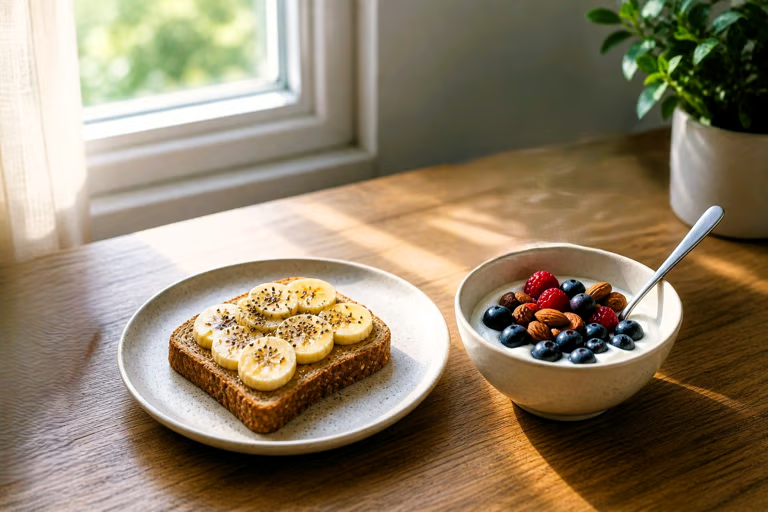
Breakfast doesn’t need to become another project. If you’re hungry in the morning, keep a few easy options around, such as yogurt, toast, a banana, eggs, or almonds.
If you usually leave without eating, preparing something the night before can make the decision easier.
Make it easier: Keep one or two grab-and-go options ready for busy mornings.
5. Get Natural Light in the Morning
Open the curtains, step outside for a few minutes, or sit near a bright window while you drink your coffee. Morning light helps reinforce your circadian rhythm and can support daytime alertness.
You don’t need to create another complicated step in your routine. Make getting light part of something you already do.
Make it easier: Open the curtains as soon as you get up or have your coffee near a bright window.
Your Healthy Morning Habits at a Glance
| Habit | Time | Easy way to start |
|---|---|---|
| Water before your phone | 1 minute | Keep water beside your bed |
| Two minutes of movement | 2 minutes | Do it while coffee brews |
| One-line journaling | 1–2 minutes | Keep a notebook beside your coffee |
| Simple breakfast | 2–5 minutes | Prepare it the night before |
| Morning light | A few minutes | Open the curtains when you wake |
How to Make Healthy Morning Habits Stick
It’s tempting to read this list and decide you’ll do all five tomorrow.
I wouldn’t. Start with one habit that feels almost too easy. Once it becomes part of your morning, you can add another.
A Simple Way to Start
For example, if you want to start moving in the morning, don’t promise yourself a 30-minute workout every day. Start with two minutes while your coffee brews.
That’s the basic idea behind how to make a new habit stick. Reduce the number of steps between deciding to do something and actually doing it.
The same principle applies when you’re learning how to make new habits stick long-term. Make the habit small, give it a clear cue, and make the setup as easy as possible.
And if you miss a morning, just start again the next day. You don’t need a perfect streak for a habit to become part of your routine.
If You Only Start With One
Choose the habit that fits the problem you actually have.
- Always checking your phone first? Start with water before your phone.
- Feel stiff in the morning? Try two minutes of movement.
- Wake up with a busy mind? Write one line.
- Skip breakfast when you’re hungry? Prepare something simple.
- Want more morning light? Open the curtains as soon as you wake up.
The goal is not to create a perfect morning. It’s to have a few small habits you can return to, even when the morning doesn’t go according to plan.
FAQ
What are 5 good habits to start in the morning?
Five good morning habits are drinking water before checking your phone, getting some movement, writing one intention, eating a simple breakfast when you’re hungry, and getting some natural light. You don’t have to start all five at once. Pick one that fits your morning and build from there.
Why do I have no motivation to build morning habits?
Motivation can change from one morning to the next, so it helps to make the habit require as little effort as possible. Start with a small action and attach it to something you already do, such as stretching while your coffee brews or drinking water after getting out of bed.
That’s what micro habits are useful for: making a behavior small enough that it feels manageable even when you’re not particularly motivated.
What is the 3-3-3 rule for habits?
The 3-3-3 rule for habits is described in different ways, so there isn’t one universally accepted habit-building framework with this name. If you’re using a specific 3-3-3 method, check the source behind that version before treating it as a standard rule.
For building healthy habits in the morning, the simpler approach in this guide is to choose one habit, connect it to an existing routine, and make it easy to repeat.
How long does it take for morning healthy habits to stick?
There is no fixed number of days that works for everyone. Habit formation varies depending on the person, the behavior, and how consistently it is repeated.
Rather than focusing on a deadline, focus on making the habit easy enough to repeat regularly. That makes how to make good habits stick long-term much more practical than trying to follow an arbitrary timeline.
What is the easiest healthy habit to start in the morning?
Drinking water before checking your phone is one of the easiest places to start because it requires very little preparation. Keep a glass or bottle beside your bed the night before, then drink it before opening your phone.
Those are good morning habits in their simplest form: one small action that fits naturally into the morning you already have.