
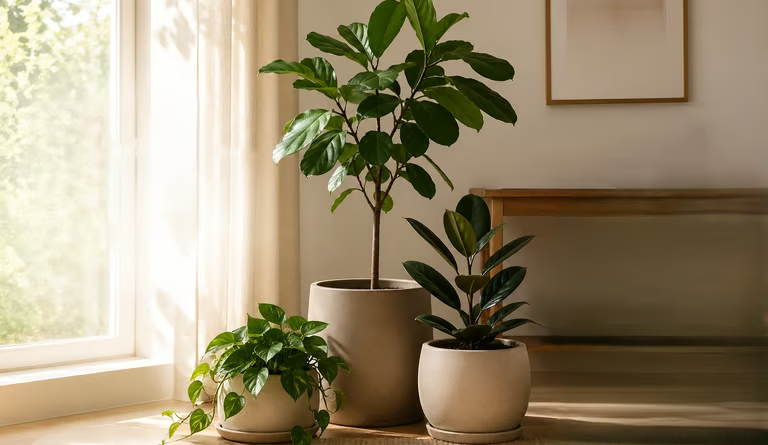
You know those rooms where the plants somehow look like they belong there?
There might be one beside a chair, another filling an empty corner, and a small one on a shelf. Nothing looks overly arranged, but the room still feels finished.
Then you look at your own space. You have healthy plants, maybe even more than you need, yet they still look like separate purchases rather than part of the room.
Usually, the problem isn’t the plants. It’s where they go and what they’re sitting in. Once those two things start working with the room, plants for home decor can make a space feel much more pulled together without adding much more to it.
The 5 Rules That Make Plant Styling Easier
Before you move a single pot, keep these five ideas in mind:
- Match pots to the room, not the plant.
- Use different heights when grouping plants.
- Place plants where the room needs something, not just where there’s space.
- Leave some breathing room between grouped plants.
- Edit what you already have before buying more.
These rules are simple, but they solve most of the problems that make indoor plant decor feel random.
The Real Problem With Most Indoor Plant Decor
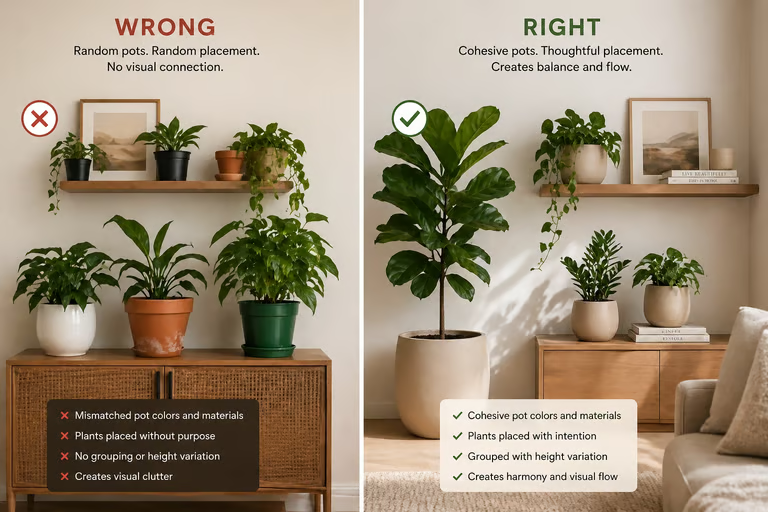
Walk into a room where the plant styling feels effortless, and look at the containers instead of the plants. You’ll usually notice they have something in common.
Maybe the pots share a material, a finish, or simply a similar color range. They don’t need to match, but they look like they belong in the same room.
That matters more than people expect. A plastic nursery pot beside glossy white ceramic and orange terracotta can make even beautiful plants feel disconnected. The plants aren’t necessarily the problem. The containers are competing with one another.
So before buying another plant, look at the pots you already have. Two matte ceramic planters in a related color family can make a bigger difference than adding three more plants.
For the same reason, the right color palette for living roomstyling can make the entire space feel more intentional and expensive.
Placement First, Purchase Second
Most people place plants wherever there’s a gap, whether it’s a bare shelf, an empty corner, or a windowsill with good light.
That usually leads to placement by default.
“What does this space need, and what kind of plant could solve it?”
A Simple Placement Guide
| If the space feels… | Try… |
|---|---|
| Empty and too low | A tall floor plant |
| Bare above eye level | A trailing plant |
| Flat beside a chair | A small plant with an interesting shape |
| Empty on a side table | One low, compact plant |
| Awkward between two areas | A taller plant to create a visual transition |
A tall corner with nothing drawing the eye upward may need a substantial floor plant. A small shelf above a reading chair usually needs something low or trailing that doesn’t compete with the chair, lamp, or books around it.
On a kitchen counter, a small group of plants can work well, especially when the pots share a material or finish. Three is often enough, but the available space matters more than following an exact number.
The room tells you what it needs when you stop trying to fill every empty space.
A trailing plant can soften a high shelf, while a tall plant can give an awkward corner some visual weight. Look for those specific jobs instead of treating every empty surface as an invitation to add another pot.
How to Choose Plant Pots That Fit the Room
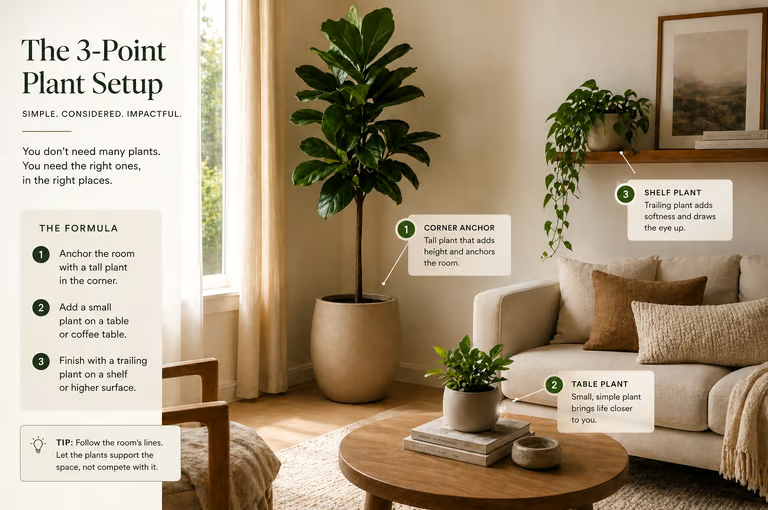
Match your pots to the existing materials in the room, not the plants.
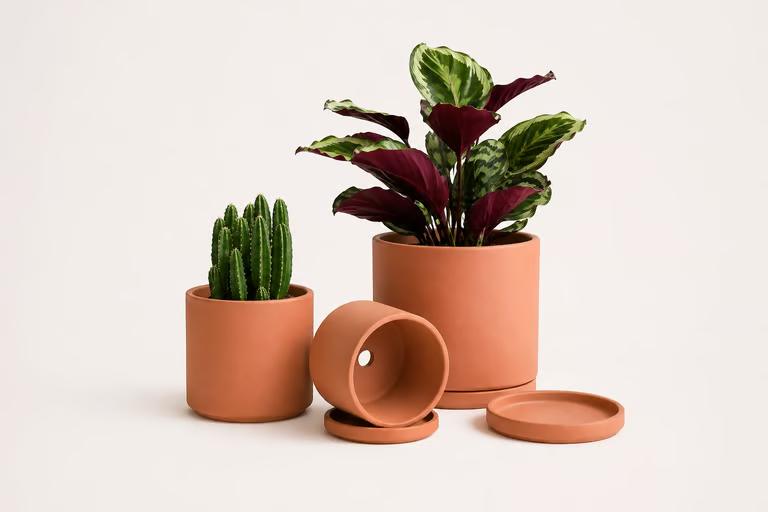
Warm tones, wood, and linen pair beautifully with terracotta and unglazed clay. The earthy warmth already exists in the room, so those pots feel connected to it.
Similarly, white walls, concrete, or metal surfaces work especially well with matte white or grey indoor planters. The result is cleaner and more architectural without requiring every pot to match.
If your room is warm and layered with texture, a woven plant stand can also add height without introducing another strong color or finish.
You’re not trying to match. You’re trying to relate.
Which Pot Finish Works With Your Room?
| Your room already has… | Try… | The effect |
|---|---|---|
| Wood, linen, warm neutrals | Terracotta or unglazed clay | Warm and grounded |
| White walls, concrete, metal | Matte white or grey | Clean and architectural |
| Lots of texture | Simple ceramic + woven stand | Layered without looking busy |
| Strong colors or patterns | Neutral matte pots | Keeps the plants from competing |
Scale matters too. A tiny pot under a large, top-heavy plant can make the whole arrangement look unstable, while an oversized planter can swallow a small plant.
The pot should feel substantial enough for the plant without becoming the first thing you notice.
If you’re starting from scratch, a small set of matte-finish pots is an easy way to create consistency without making every planter identical.
How Grouping Actually Works
Odd-number groupings often feel more natural, which is why three plants are such an easy starting point. But the more important factor is height.
The Easy 3-Plant Formula
1 tall + 1 medium + 1 low or trailing
The variation creates a clear silhouette, so the group feels arranged rather than simply collected.
The plants don’t have to be identical in shape, either. A tall upright plant beside a fuller plant and a trailing variety creates more movement than three plants with similar shapes.
The pots within the group should also belong to the same family. Matte terracotta, a slightly larger matte clay planter, and a small unglazed ceramic pot can work together because they share a quiet, earthy quality without looking identical.
And leave some space between them. Crowding can make even a well-chosen group feel messy. The space between the plants is part of the arrangement too.
Living Room Plant Decoration: Where to Start
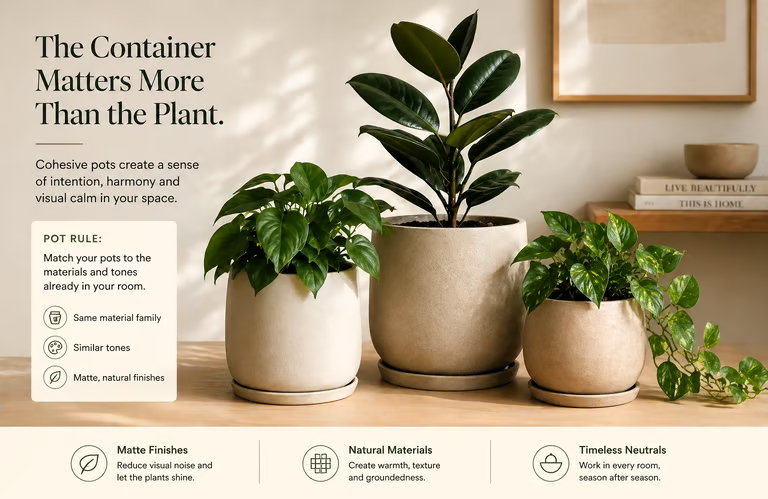
Start with the living room because it usually gives you the most room to see whether your plant styling is actually working.
Look first at the areas that feel visually empty rather than automatically adding plants to every surface.
A tall floor plant can anchor a corner. A small plant can finish a side table. A trailing variety can soften a shelf. You don’t necessarily need all three. Choose based on what the room is missing.
Living room decor plants work best when they follow the room’s natural lines. Low furniture pairs well with low plants, while high shelving can work with taller plants or trailing varieties.
This makes indoor plants in living room settings feel like part of the room rather than decorative objects sitting on top of it.
For the full picture on making a living room feel more spacious and styled, see How to Style a Small Living Room So It Feels Twice the Size →
Green Plants for Bedroom: Keep It Simple
The bedroom is naturally quieter than the living room, so the plant styling should be quieter too.
Green plants for bedroom spaces work best when they’re limited in number. One plant near a window or two small pots on a bedside table can be enough, especially when the containers relate to each other.
A matte white or neutral ceramic planter on a light wood surface keeps the corner quiet without making it feel unfinished.
If the bedroom already has several patterns, decorative objects, or strong colors, choose plants with simple shapes and restrained containers. The goal isn’t to create another focal point. It’s simply to add a little life without making the room feel busier.
Before You Buy Another Plant
If your home already has several plants, try editing before shopping.
Take a quick look at each one and ask what it is doing for the room.
Quick Plant Styling Checklist
- ☐ Does the room actually need more greenery?
- ☐ Is there an empty area that needs height?
- ☐ Are your existing pots visually compatible?
- ☐ Could moving a plant solve the problem?
- ☐ Would changing the pot work better than buying another plant?
- ☐ Does the plant add height, texture, softness, or shape?
If you can’t find a clear purpose for a plant, move it somewhere else before buying anything new.
This is also a good time to look at the pots. If the plants work individually but the room still feels messy, changing a few mismatched containers may be enough.
Sometimes the easiest plant styling upgrade is simply removing what isn’t helping.
The Difference Is in the Editing
You don’t need more plants to make the room feel finished. Start with the ones you already own.
Move the plant that’s floating in the wrong corner. Group two pots that actually work together. Replace the nursery pot that’s been bothering you for months. Then step back and see what the room is still missing.
Good plant styling is usually less about adding and more about editing. Once the plants, pots, and room start working together, the space feels considered without looking overdone.
Save this for your next plant styling session
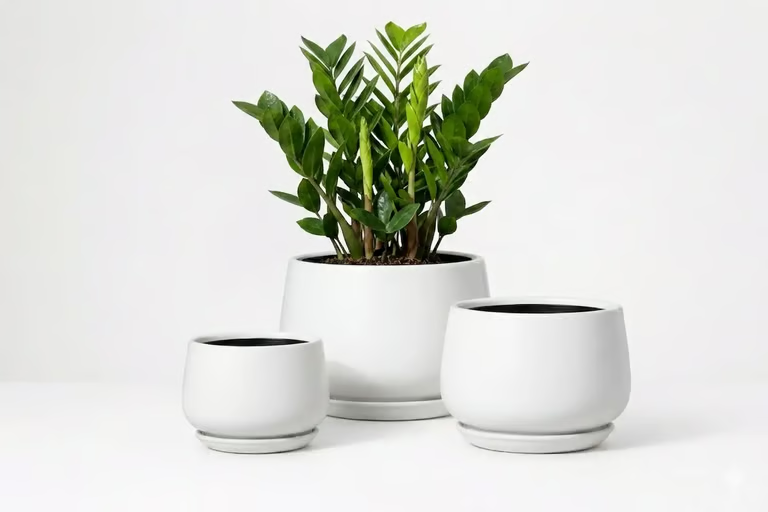
→ For matching a group: Matte ceramic indoor plant pots, set of 3
→ For warm interiors: Terracotta plant pots, unglazed finish
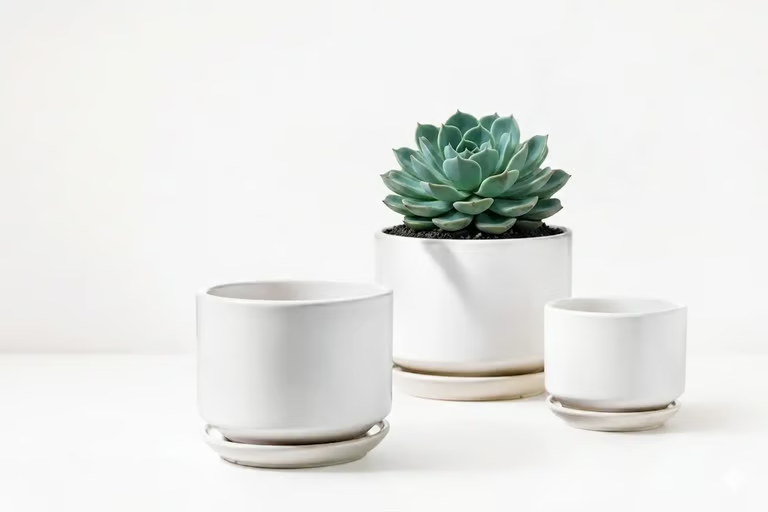
→ For shelves and side tables: Small ceramic pot, white minimalist
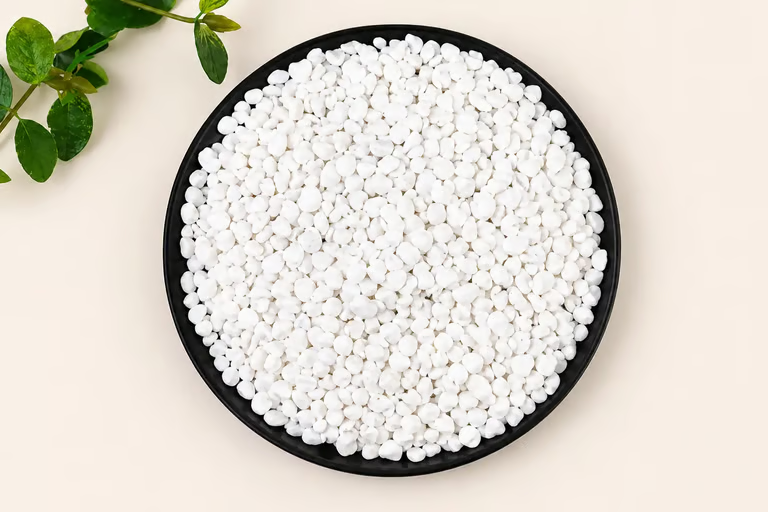
→ For finishing the pot: Decorative stones for indoor plants
FAQ
How many plants should I have in my living room?
Start with three if you’re unsure: one tall, one medium, and one small or trailing. But you don’t need three simply because it’s a common styling rule. The size of the room and the amount of furniture matter more. A single well-placed floor plant can be enough for a small space.
What type of pot is best for indoor plants?
Matte ceramic and terracotta are versatile choices because they work across many interior styles, including minimal, warm, Scandinavian, and more layered spaces. Choose a finish that already relates to the materials and colors in your room rather than choosing a pot in isolation.
Why do my plants look messy even though I have nice ones?
Often, it’s the combination of pots and placement. Mixed finishes, unrelated colors, and plants scattered across every available surface can create visual noise. Try grouping a few plants, keeping their containers within the same material or color family, and removing plants that don’t serve a clear purpose.
Can I use plants in a small room without it feeling cluttered?
Yes, fewer plants with better placement usually work better than filling every available surface. One taller plant in a corner and one small plant on a shelf or side table can be enough. Choose plants with clean silhouettes, such as snake plants, pothos, or peace lilies, when the room already feels visually busy.
Do expensive plants make a room look better?
Not necessarily, a simple pothos in a well-chosen matte ceramic planter can look more intentional than an expensive plant sitting in a mismatched nursery container. The overall arrangement, pot, and placement usually have more influence on the finished look than the price of the plant.
Where should I put plants in a living room?
Start with areas that feel visually empty or unbalanced. An unused corner may need a tall plant, while a shelf might benefit from something low or trailing. Avoid placing plants simply because there’s an empty surface. Each plant should have a reason for being there.
How do I make different plant pots look cohesive?
Keep at least one element consistent, such as material, finish, or color. The pots don’t need to match exactly. A group of terracotta and unglazed clay pots, for example, can feel cohesive because they share a similar texture and warmth.