
A skincare routine for beginners doesn’t need to be complicated. A basic skincare routine for beginners starts with just three products: a gentle cleanser, a moisturizer, and sunscreen.
You can skip serums, toners, and exfoliants at first while you learn how your skin responds to the basics.
This guide explains how to choose products for your skin type, follow a simple morning and night routine, and introduce new products safely.
Start With These Three Essential Skincare Products
A basic skincare routine for beginners starts with these three essentials:
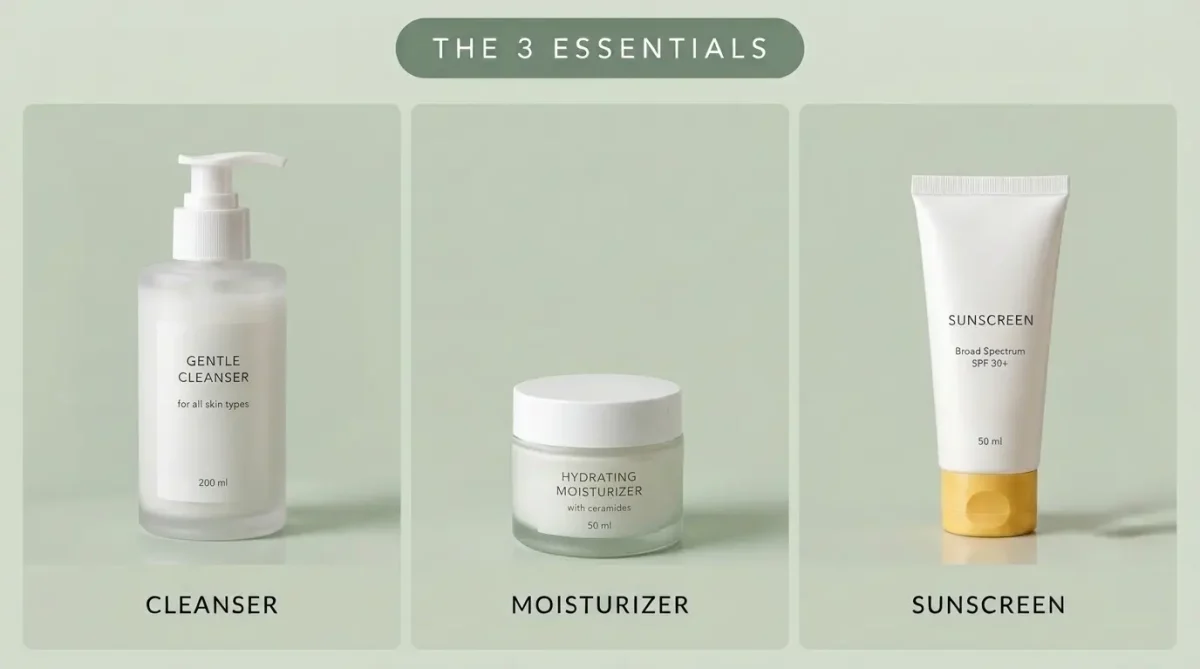
1. Cleanser:
Removes oil, sweat, dirt, and sunscreen. Choose a gentle, non-abrasive formula that leaves your skin comfortable rather than tight or squeaky.
2. Moisturizer:
Helps maintain skin hydration and reduce moisture loss. Even oily skin benefits from moisturizing.
3. Sunscreen:
Protects your skin from UV exposure. Choose a broad-spectrum sunscreen with SPF 30 or higher, preferably water-resistant if you’ll be sweating or swimming.
How to apply sunscreen: Apply generously and evenly to your face, ears, neck, and other exposed skin as the final step of your morning skincare routine, before makeup if you wear it. Apply about 15 minutes before going outdoors if directed by the label. Reapply every two hours while outdoors and after swimming or sweating, following the product instructions.
How to Choose the Right Products for Your Skin Type
The three steps stay the same for everyone, but the formulas you choose should suit your skin’s needs.
- Oily skin: Choose a lightweight gel or lotion moisturizer labeled non-comedogenic or “won’t clog pores.”
- Dry skin: Choose a richer cream and a gentle cleanser that doesn’t leave your skin feeling tight.
- Combination skin: Start with a lightweight moisturizer and apply more to drier areas if needed.
- Sensitive skin: Choose fragrance-free products and avoid formulas that trigger irritation.
Not Sure About Your Skin Type?
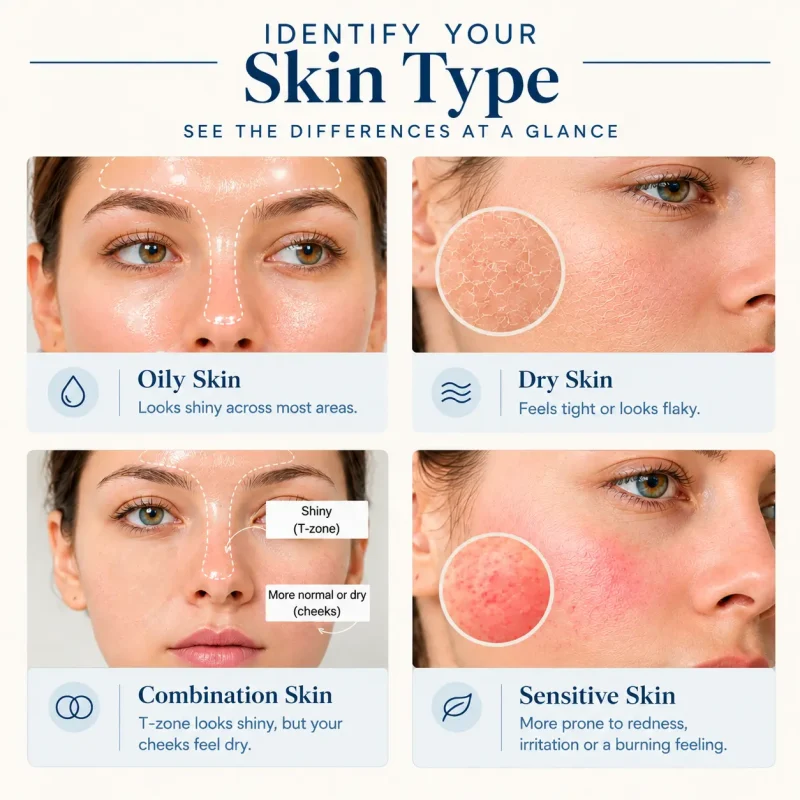
Wash your face with a gentle cleanser, pat it dry, and wait 30 minutes without applying skincare products. Then check how your skin feels and looks rather than relying on shine alone.
- Oily skin: Your face looks shiny across most areas.
- Dry skin: Your skin feels tight or looks flaky.
- Combination skin: Your T-zone (forehead, nose, and chin) looks shiny, but your cheeks feel dry.
This simple test can help you get started, but it’s not a diagnosis. Your skin’s needs can also change with the weather and the products you use.
Put Your Three Products Into a Basic Skincare Routine for Beginners
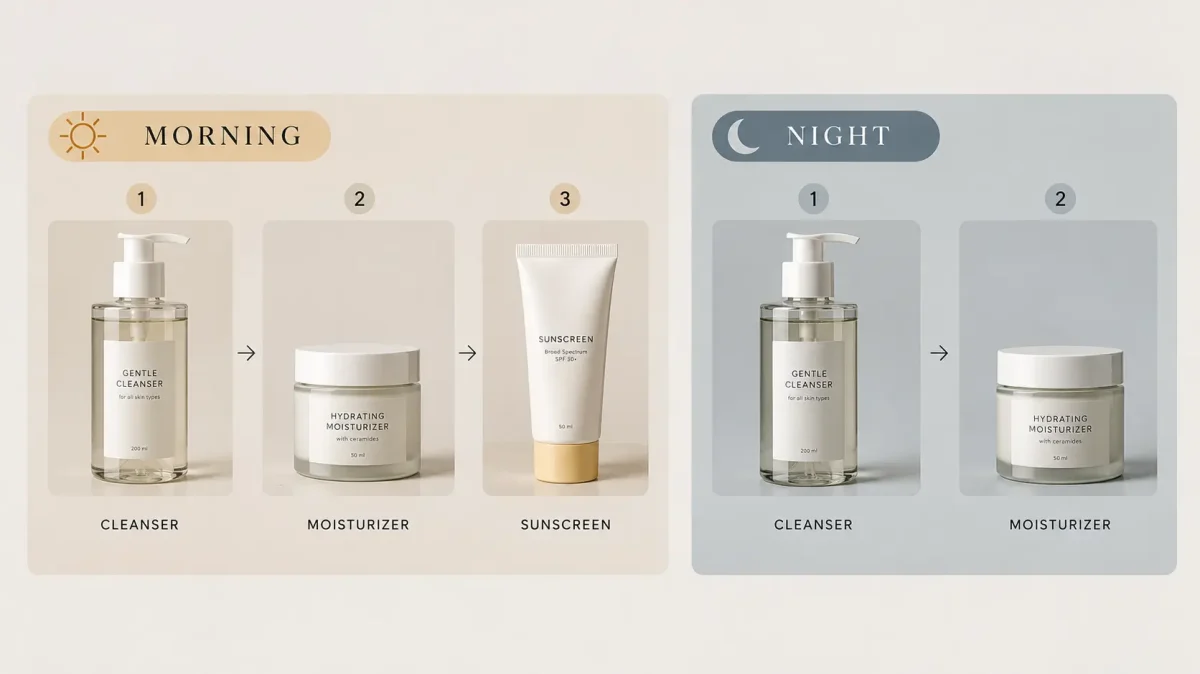
This is how to build a basic skincare routine for beginners using the same three products, with sunscreen added only in the morning.
Step | Morning | Night |
1 | Rinse with water or use a gentle cleanser, depending on your skin’s need | Gentle cleanser to remove sunscreen and daily buildup |
2 | Moisturizer | Moisturizer |
3 | Broad-spectrum sunscreen, SPF 30 or higher | Not needed |
Keep cleansing gentle. Use lukewarm water and your fingertips rather than scrubbing, which can irritate your skin. The American Academy of Dermatology’s face-washing guide explains the recommended approach.
That’s the whole routine. You don’t need extra steps simply because other people use them.
What Else Do You Need (and What Can You Skip)?
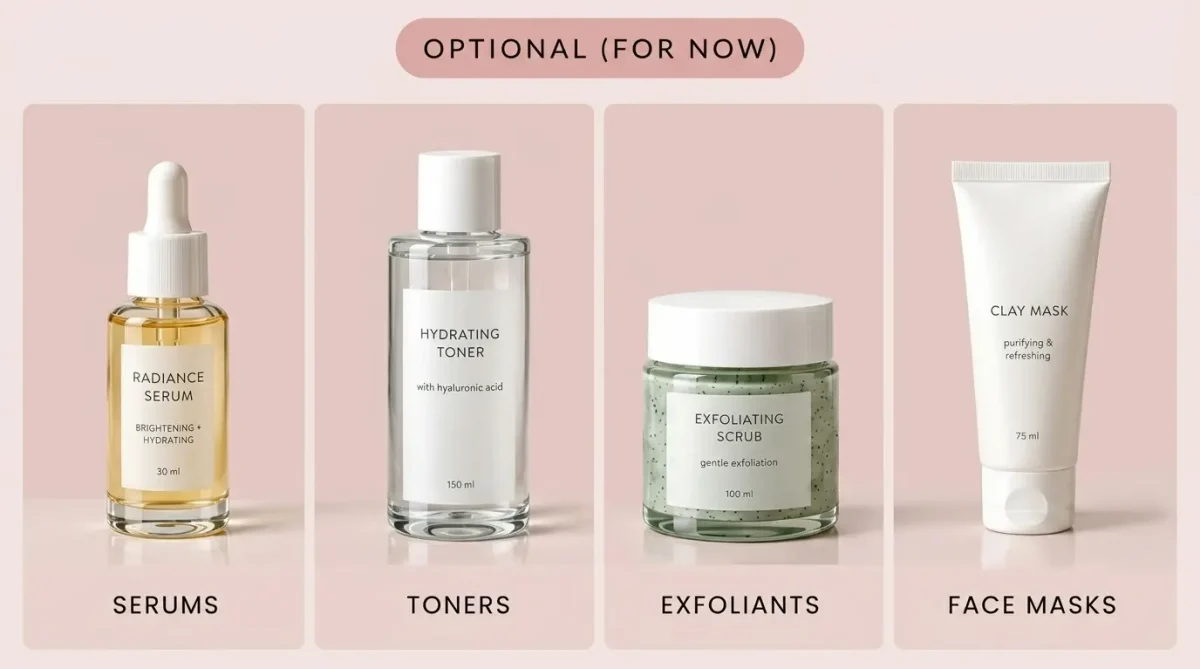
If you’re wondering how to start a skincare routine for beginners, you don’t need every product on the shelf. These extras are optional:
- Serums: Skip them initially unless you have a specific skin concern you want to address.
- Toners: Not essential for a basic skincare routine.
- Exfoliants and scrubs: You can leave them out while establishing your routine, as overuse can irritate your skin.
- Eye creams: Optional if your regular moisturizer meets your needs.
- Face masks: Not necessary for your daily skincare routine.
Adding several products at once makes it harder to identify which one suits your skin and which might be causing a reaction.
Once Your Basic Routine Works, Here's How to Add New Products
When learning how to build a skincare routine for beginners, introduce one new product at a time.
Once your basic skincare routine feels comfortable, consider whether you need another product to address a specific concern, such as persistent dryness, uneven skin tone, or breakouts.
Before adding anything, ask yourself two questions:
- Is there a specific skin concern your current routine isn’t addressing?
- Have you been using your basic products consistently without irritation?
If your current routine is working for you, there’s no need to add another step.
Before applying a new product to your face, follow the American Academy of Dermatology’s guide to testing skincare products and introduce it according to its instructions.
How to Patch Test a New Skincare Product
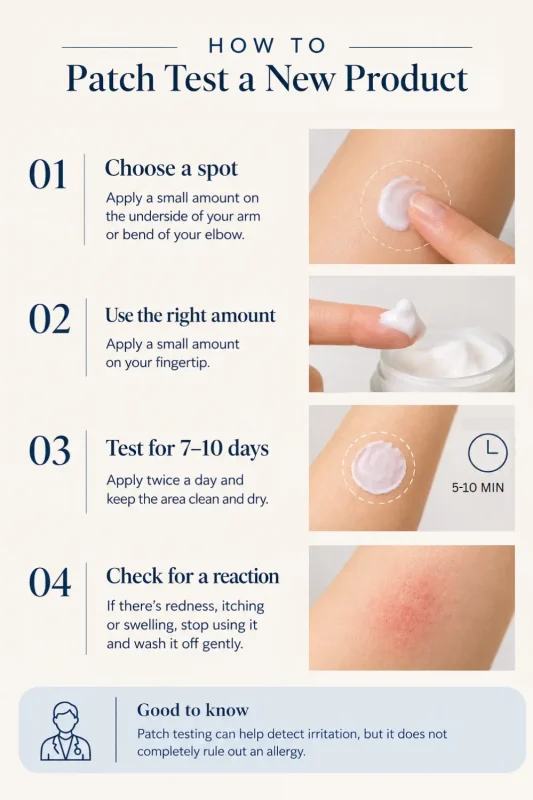
1. Choose a test spot:
Apply the product to a quarter-sized area on the underside of your arm or the bend of your elbow, where it won’t be rubbed or washed away.
2. Repeat the test:
Apply the product to the test area twice daily for seven to ten days, following the product instructions. Leave it on for as long as you normally would. For rinse-off products, follow the directions or rinse after about five minutes.
3.Check for a reaction:
If your skin stays clear of redness, itching, or swelling, begin using the product as directed. If a reaction develops, wash the product off gently and stop using it.
A patch test can help identify potential reactions, but it cannot guarantee that a product will never irritate your skin.
What to Do If a Skincare Product Irritates Your Skin
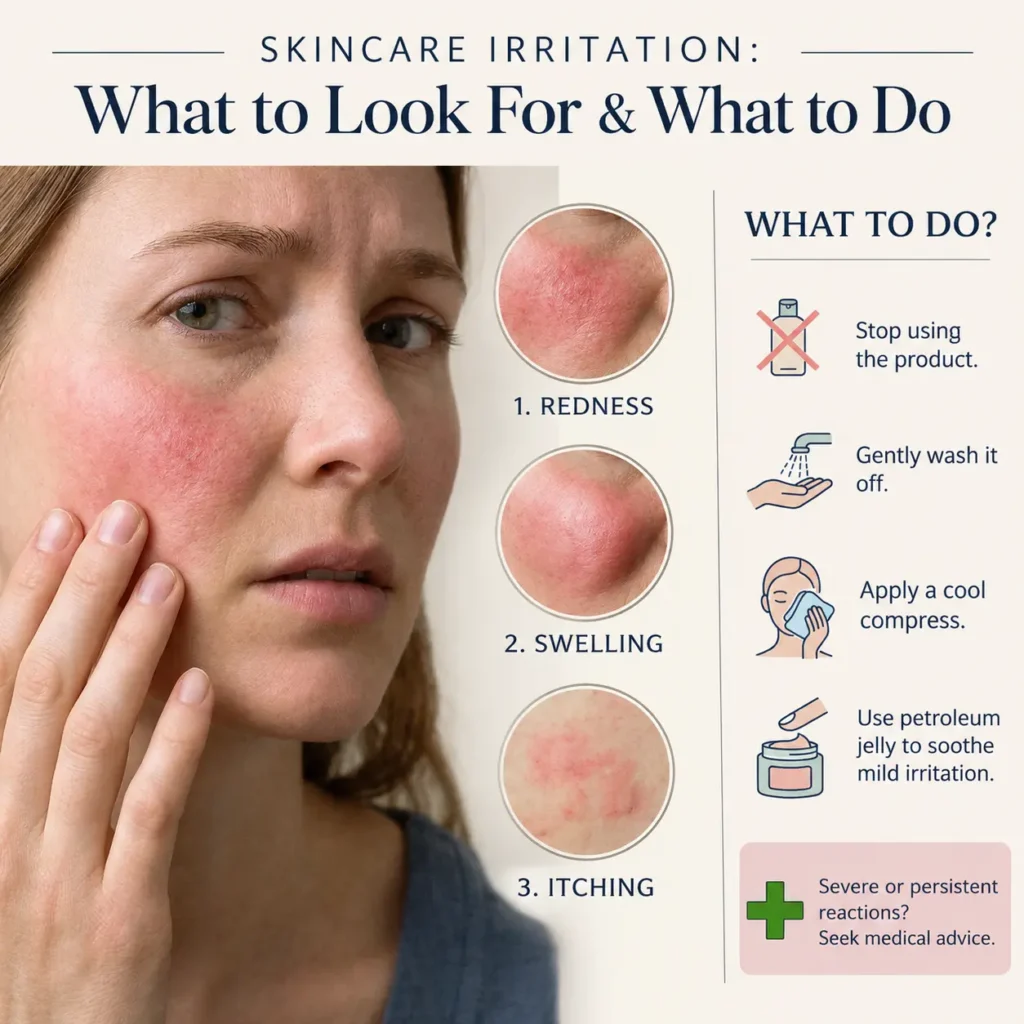
Burning, itching, swelling, or persistent redness should not be treated as a normal adjustment period. Stop using the product and gently wash it off. A cool compress or petroleum jelly may help soothe a mild reaction. If the reaction is severe or doesn’t settle, seek medical advice.
A product labeled hypoallergenic, natural, or clean can still cause a reaction. These labels don’t eliminate the need to test a new product.
If you repeatedly react to skincare products, a dermatologist can help identify possible triggers.
Common Mistakes to Avoid When Starting a Skincare Routine
- Buying a full routine at once: If your skin reacts, you won’t know which product caused it.
- Copying someone else routine: Their skin type, climate, and concerns may be different from yours.
- Exfoliating too often: Scrubs and exfoliating acids can irritate skin, especially when introduced too early.
- Skipping sunscreen because your skin looks fine: Sunscreen protects against UV damage even when you don’t notice an immediate effect from sun exposure.
- Switching products every week: Constant changes make it difficult to determine which formulas suit your skin.
When you’re comfortable with the basics and want to add a serum or treatment, read our guide to the right order for each step in your morning and night skincare routine.
For more ideas, explore our guide to self-care products I actually use every week.
FAQ
How many products does a beginner need?
Three products are enough to start: a gentle cleanser, a moisturizer, and sunscreen. Other products are optional and can be introduced later if you have a specific concern.
Do I need a serum, toner, or exfoliant to start?
No, a cleanser, moisturizer, and sunscreen are enough for a basic routine. Add a serum or other treatment only if you have a specific concern you want to address.
How long does it take to see results?
It depends on the product and the concern you’re addressing. Give your routine several weeks of consistent use before judging how well it suits your skin. If a product causes burning, significant redness, itching, or swelling, stop using it rather than waiting for your skin to adjust.
Should I wash my face in the morning and at night?
A gentle cleanse at night helps remove sunscreen, makeup, and daily buildup. In the morning, a water rinse may be enough if your skin is dry or sensitive, while other skin types may prefer a gentle cleanser. Adjust based on how your skin feels, and avoid scrubbing or washing excessively.
Does my skin type change the routine?
The three basic steps stay the same, but the formulas change. Lightweight moisturizers suit oily skin, while richer creams are better suited to dry skin. Sensitive skin benefits from fragrance-free products.
How do I know if a product is irritating my skin?
Redness, itching, swelling, or persistent discomfort after using a product can indicate irritation or an allergic reaction. Wash the product off gently and stop using it. Seek medical advice if the reaction is severe or doesn’t settle.
Should I consult a dermatologist before starting skincare?
If you have acne, eczema, rosacea, or another persistent skin condition, consult a dermatologist about the most appropriate products and treatments for your skin.