
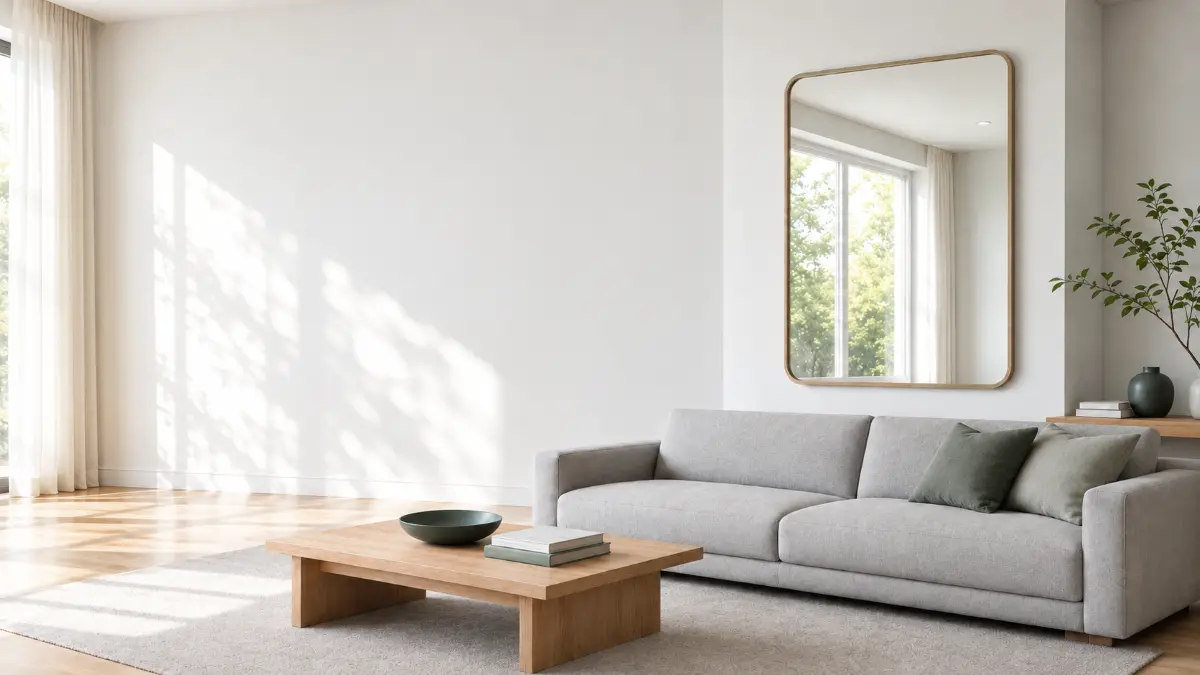
My living room is 11 by 13 feet. I measured it three times before buying a couch, worried it would take over the room.
The couch fit, but the room still felt small. So, do mirrors make a room look bigger? Yes, but the mirror itself isn’t the clever part. Where you put it is.
The wrong placement can make even a beautiful mirror feel almost pointless.
The Short Answer
Yes, mirrors can make a room look bigger, but only when they reflect something worth seeing, like a window, a lamp, or an open part of the room. One that faces a blank wall does very little.
The key is choosing the right placement, not adding more mirrors.
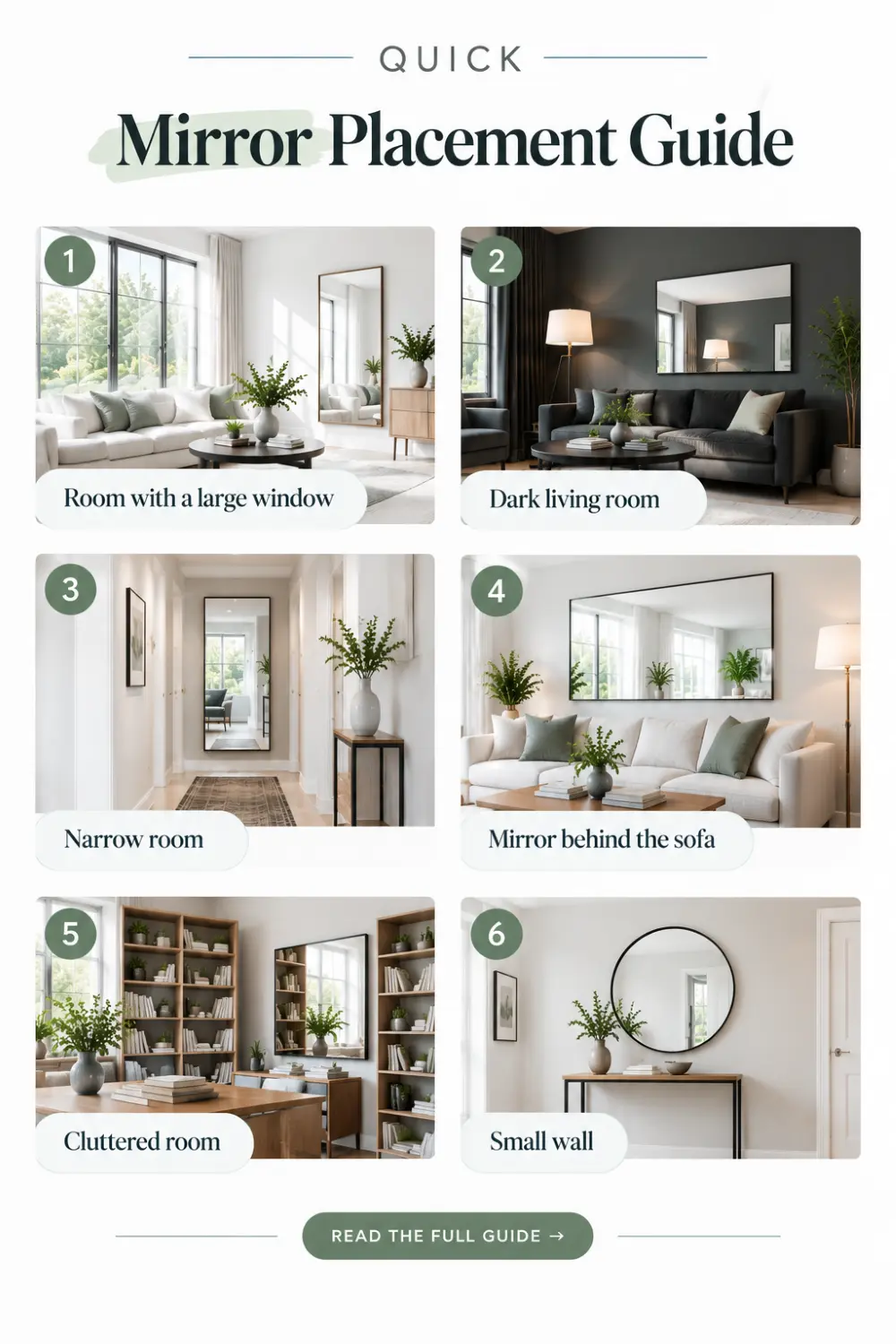
Quick Mirror Placement Guide
| Room situation | Best mirror placement |
|---|---|
| Room with a large window | Across from or slightly angled toward the window |
| Dark living room | Where it can reflect a floor lamp or strong light source |
| Narrow room | A mirror on a long wall, so the reflection adds width |
| Mirror behind the sofa | Use it if the reflection is attractive and uncluttered |
| Cluttered room | Avoid reflecting busy shelves or surfaces |
| Small wall | Use one appropriately scaled mirror rather than several small ones |
Why Mirrors in a Small Living Room Feel More Open
Have you wondered how do mirrors make a room look bigger? They create a sense of depth by giving your eye more to see beyond the wall. In a small room, that extra view can make the space feel less enclosed.
Light plays a role, too. A mirror positioned to reflect daylight can bring more brightness into darker parts of the room, helping the space feel more open. This can make a noticeable difference in a small living room, where both natural light and clear sightlines matter.
But why do mirrors make a room look bigger in some spaces and barely change others? It comes down to the reflection. A view of a window, doorway, or open area adds depth, while a blank wall or cluttered shelf does little to help. A mirror doesn’t add square footage; it changes how spacious the room feels.
Mirror Placement for a Small Living Room
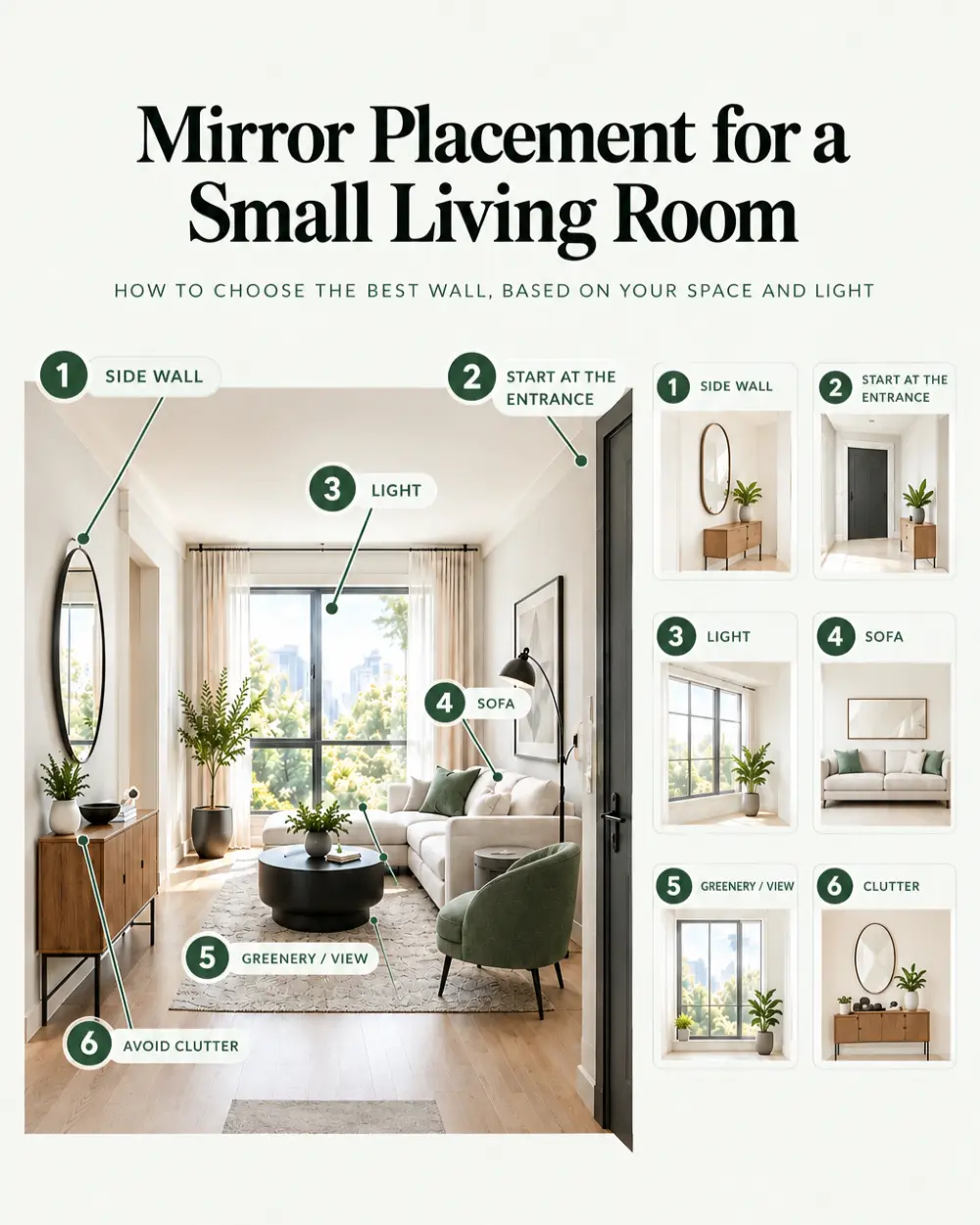
The best mirror placement for a small living room is one that reflects natural light, a useful light source, or an open part of the room.
If you’re deciding where to hang a mirror in your living room, a side wall facing a window often works well, especially when the reflection is attractive and uncluttered.
Before choosing a wall, stand at the entrance and look around. Pay attention to:
- Windows and lamps: Where can the mirror pick up light?
- Open views: Can it reflect a doorway or a clear part of the room?
- Your first sightline: Where does your eye naturally go when you enter?
1. Start with the Light
- Room with natural light: Position the mirror to catch light from a window or glass door.
- Dark living room: Place it where it can reflect a floor lamp or another strong light source.
- Avoid ceiling reflections: The mirror doesn’t have to sit directly opposite the light. A slightly offset position can keep it from catching the ceiling and give you a better view.
2. Think About What You'll See
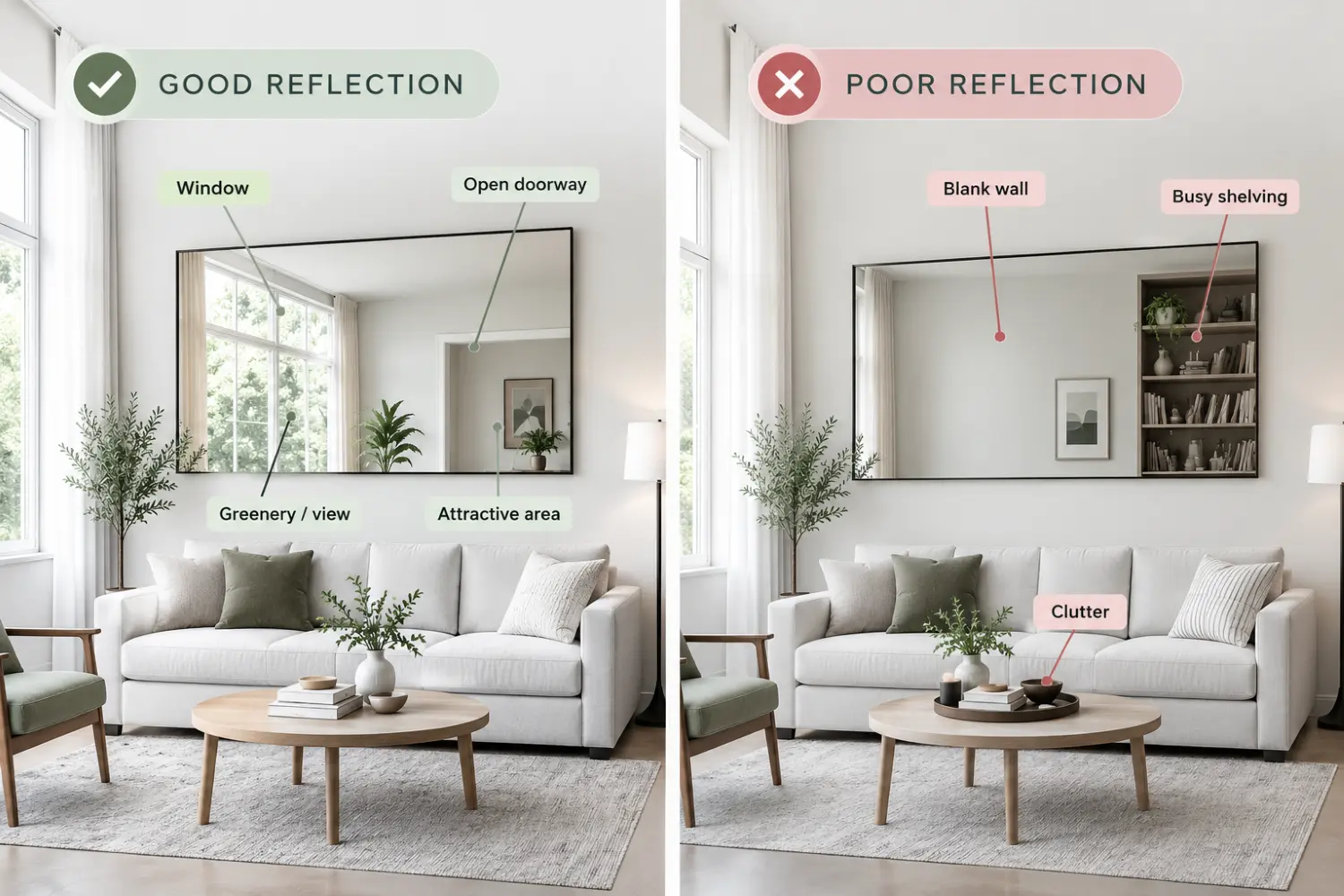
Before hanging the mirror, imagine what will appear in its reflection.
Good reflections:
- A window or open doorway
- Greenery or attractive artwork
- An uncluttered part of the room
Reflections to avoid:
- Messy bookshelves
- Overflowing baskets
- Crowded consoles or surfaces
It’s much easier to check the reflection before you put holes in the wall.
3. Don't Automatically Put It Behind the Couch
A large mirror above a sofa can look beautiful, but it isn’t always the best choice for making a room feel larger.
- It might reflect the backs of people’s heads.
- It might mostly show the opposite wall.
- A side wall may offer a clearer view of a window or open space.
I moved mine from behind the couch to the side wall facing the window last year. Nothing else changed. The room felt bigger because I stopped noticing where it ended.
4. Give a Large Mirror Some Breathing Room
- Let it stand out: Leave some visual space around a substantial mirror.
- Avoid crowding it: Several small frames around it can make the wall feel busy.
- Keep the arrangement intentional: The mirror should feel like a feature, not another item competing for attention.
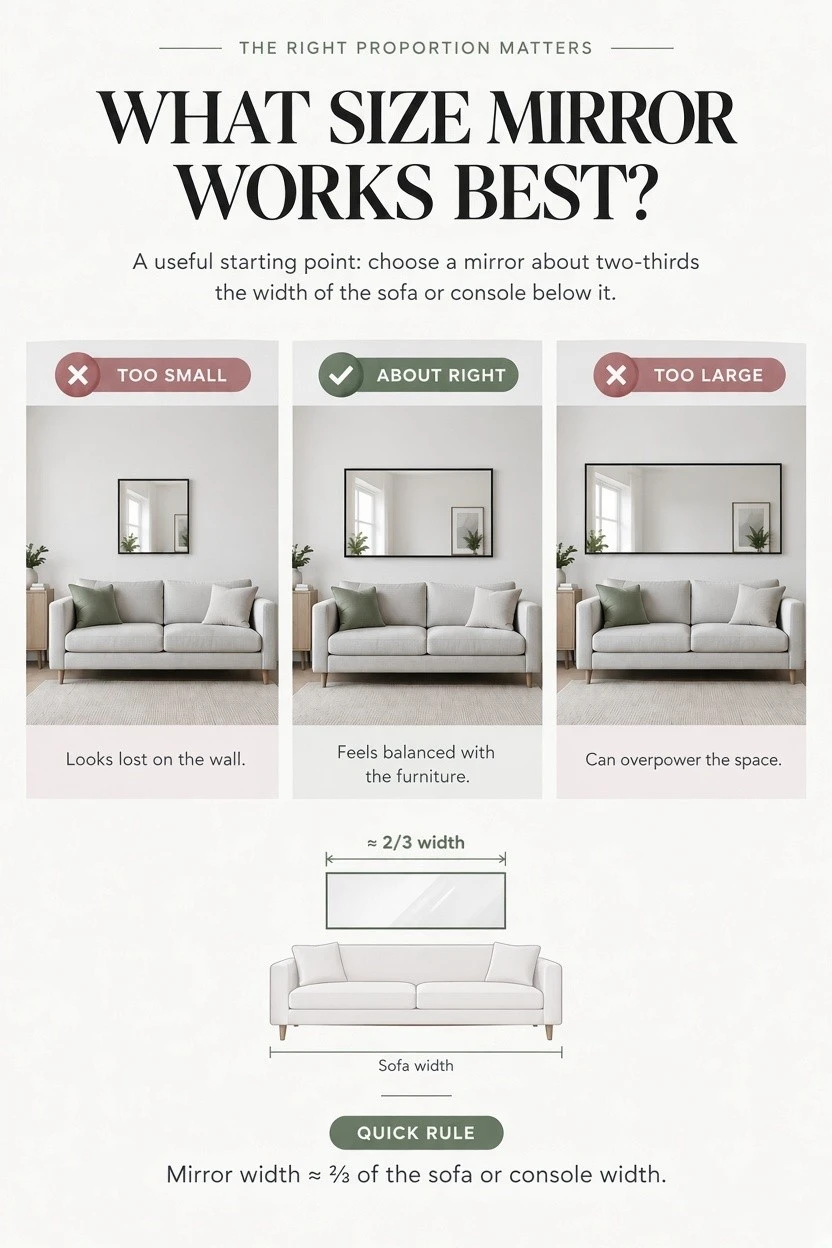
What Size Mirror Actually Works?
If you’re wondering do large mirrors make a room look bigger, they can, especially when they reflect a window or an open view rather than clutter.
There isn’t one perfect mirror size for every living room. The right size depends on your wall, furniture, ceiling height, and viewing distance.
1
A mirror around two-thirds the width of a nearby console, sofa, or mantel is a useful starting point.
2
They can disappear into the wall and look more like accessories.
3
A mirror that’s too large for the wall can feel visually heavy.
4
One appropriately scaled mirror will usually have more impact than several tiny mirrors competing for attention.
The two-thirds rule is a guide, not a strict measurement. Let the proportions of your room make the final decision.
When you choose a large mirror for a living room wall, pick a size that suits the furniture and a reflection that adds visual space instead of clutter.
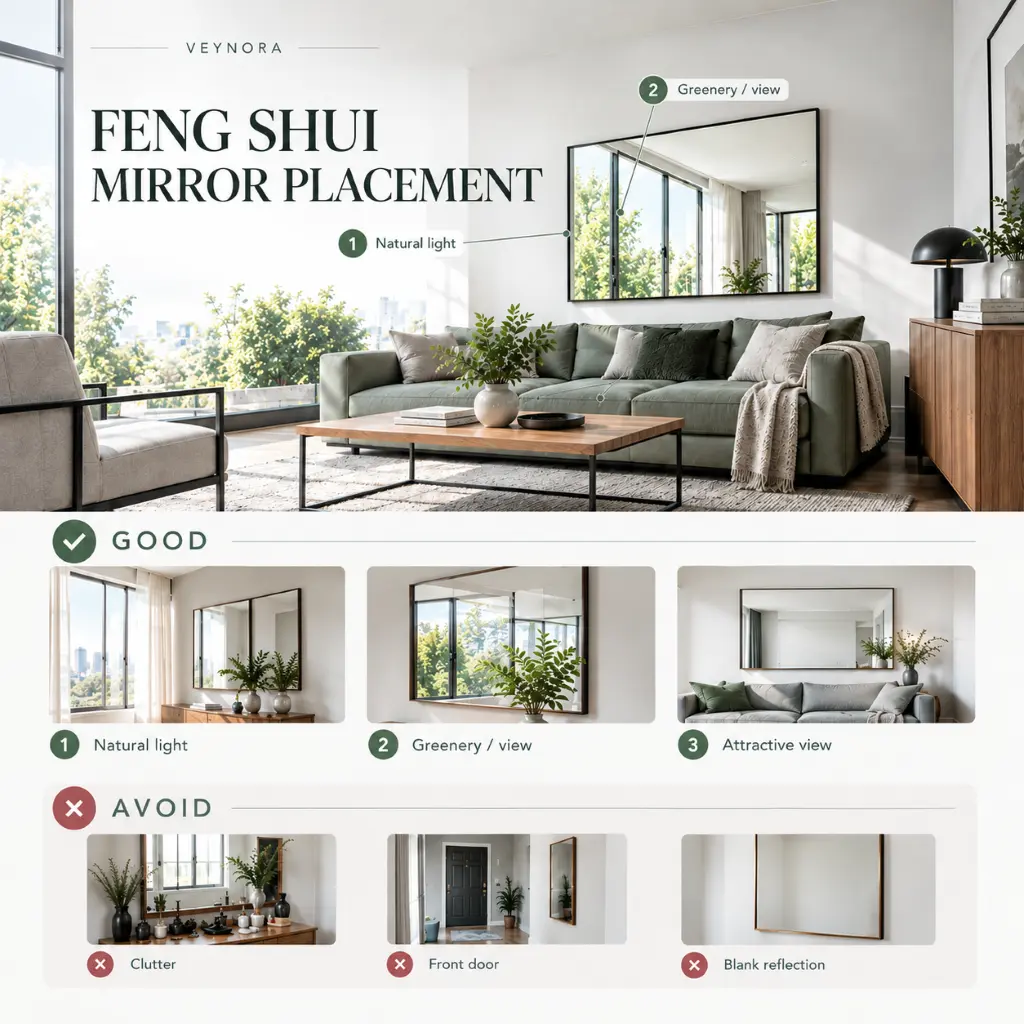
Feng Shui Mirror Living Room: What to Consider
If you follow feng shui, what a mirror reflects is just as important as where you place it.
Mirrors are traditionally used to reflect things considered positive, such as natural light, greenery, or an attractive view. A mirror directly facing the front door is often avoided because it’s believed to reflect energy back outside.
You don’t need to follow feng shui to benefit from thoughtful mirror placement. The practical idea is simple: be intentional about what you see in the mirror and how it affects the feel of your room.
Mistakes That Make Mirrors Backfire
A mirror can be the right size and still look wrong in the room. Watch out for these common mistakes:
- Hanging it too high: If the mirror mostly reflects the ceiling, you’re losing much of its useful reflection. Position it where it works naturally from your main seating and walking areas.
- Choosing a heavy frame: A thick, dark frame can dominate a dim room and draw attention away from the reflection.
- Reflecting clutter: I had mine facing a bookshelf for months before realizing it wasn’t fixing the room. It was reflecting the mess right back at me.
Before hanging a mirror, check what will appear in its reflection. The mirror may be the decoration, but the reflection becomes part of the room too.
FAQ
Do mirrors actually make a room look bigger, or is that just a decorating myth?
They can make a room appear larger, especially when the reflection adds light or another open sightline. The effect is visual rather than physical: the room hasn’t gained square footage, but it can feel less enclosed.
How do you make a small living room look bigger with a mirror?
Choose a mirror large enough to have visual impact and place it where it reflects a window, light source, doorway, or another attractive part of the room. Avoid positioning it where the main reflection is clutter or a blank wall.
Where should you hang a mirror in a small living room?
A side wall facing a window or another useful light source is often a strong choice. You can also place it where it captures an open doorway, attractive view, or another part of the room that adds depth.
What should a mirror reflect to make a room look bigger?
Look for something that adds brightness, depth, or visual interest, such as a window, open doorway, greenery, artwork, or a well-lit part of the room. What appears in the reflection matters almost as much as the mirror itself.
How big should a mirror be in a small living room?
Choose a size that feels substantial on the wall without overwhelming the furniture around it. Around two-thirds the width of nearby furniture is a useful starting point, but the proportions of the room should have the final say.
Should a mirror go behind the couch or on a side wall?
Either can work, but a side wall may be better if it gives the mirror a clearer view of a window or open part of the room. Behind the couch works when the reflected view is attractive and the mirror fits naturally with the furniture.
Can a mirror help a room with almost no natural light?
Yes, although it can’t replace good lighting. In a darker room, position the mirror to pick up a floor lamp or another strong light source. The result will be more noticeable when the rest of the room isn’t overly dark or cluttered.
What mirror shape works best for a small living room?
The shape should work with the room rather than follow a universal rule. Taller rectangular or oval mirrors can emphasize height, which also helps if you’re trying to make a ceiling look higher, while round mirrors tend to feel softer and more decorative. Choose based on the wall, furniture, and overall proportions.
If you’re working on the whole room, our guide on how to style a small living room so it feels twice the size covers layout, lighting, and clutter from start to finish.
Paint plays a part too, and what color makes a room look bigger explains how to match wall color to your light. If you want the room to feel warm as well as open, our cozy apartment aesthetic roundup is a good next step.