
How to Style a Small Living Room So It Feels Twice the Size
A small living room doesn’t have to feel cramped. Smart furniture placement and colour choices can make any space feel open, calm, and expensive.
INTERIOR
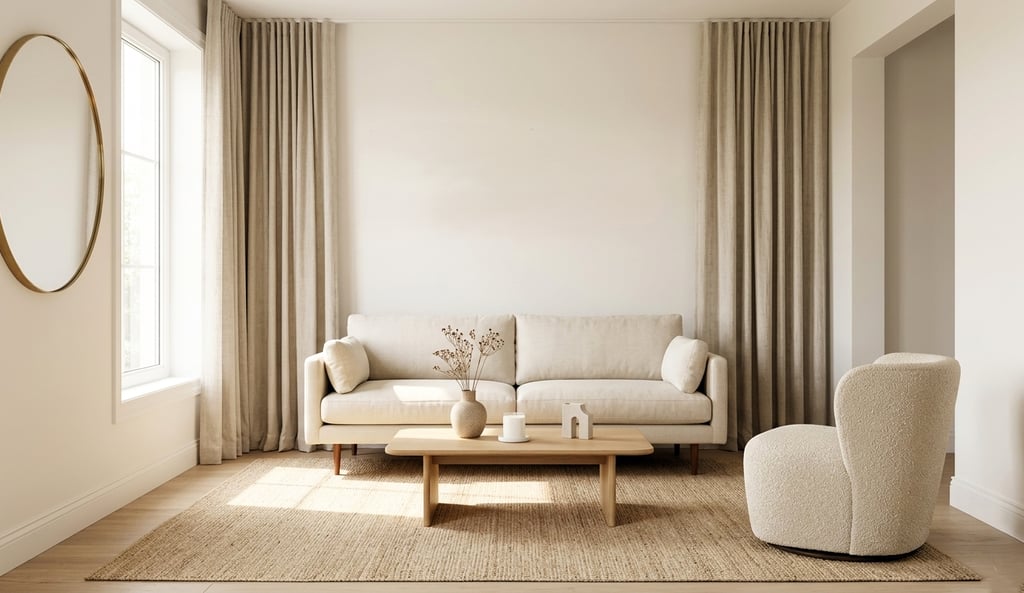
1. The Rug Size Mistake Most People Make
If there's one small living room mistake that interior designers see constantly, it's a rug that's too small.
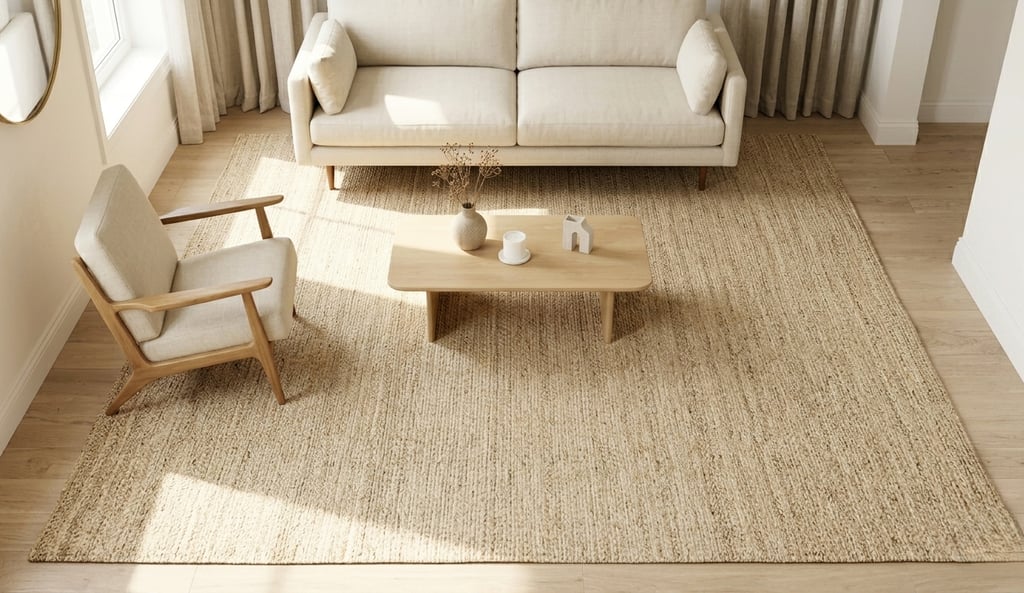
A small rug, in the centre of the room, breaks up the floor space and actually makes the room feel more fragmented. A larger rug one that fits at least the front legs of all your main seating grounds the entire seating area as a single zone. The room reads as one cohesive space instead of scattered pieces.
As a rule: If the rug looks right when you're standing in the store, it's probably too small for your home. Go one size up. Always.
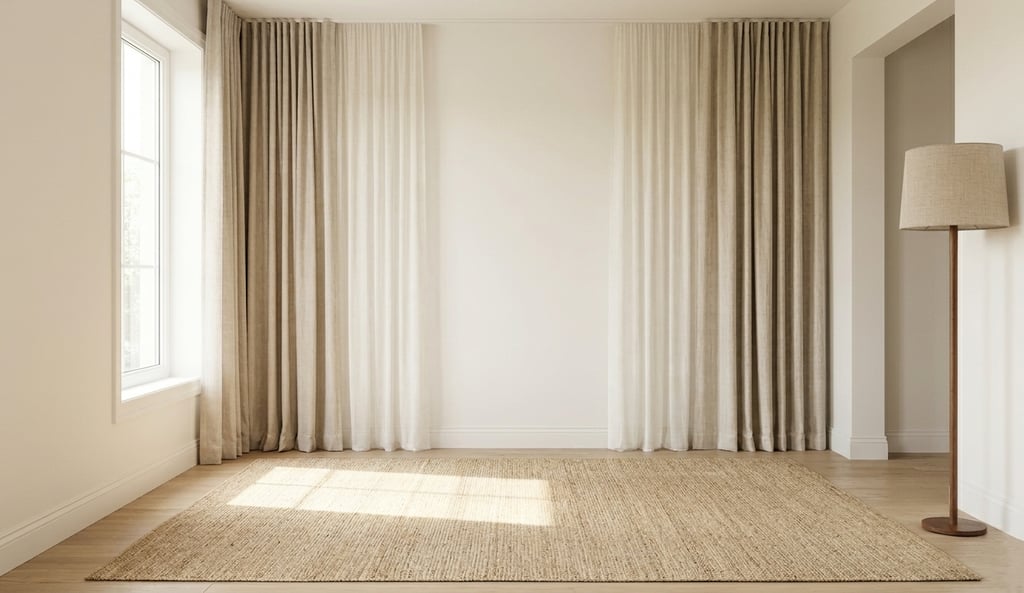
For small living rooms specifically, a light coloured rug—cream, oat, or natural jute extends the floor visually. Dark rugs can work beautifully but require more light to balance.
Decluttering Isn't Minimalism — It's Editing
The most beautiful small living rooms aren't empty. They're edited.
Editing means every object on display has either a practical function or genuine visual value. Not sentiment. Not the habit of keeping something you haven't looked at in years. Visual value — a beautiful ceramic, a plant that adds life and height, a single book with a striking cover left on the coffee table.
The surfaces that tend to age poorly: Coffee tables covered in remote controls and magazines. Windowsills crowded with random objects. Shelves that have become a graveyard of things without homes.
The rule that helps: For every surface, allow a maximum of three objects. A plant, a candle, one decorative object. That's it. What doesn't fit on the surface goes into storage — not onto another surface.
This isn't about living with less. It's about letting what stays actually breathe.
Start Here: The Highest-Impact Changes First
If you're reading this and your living room needs attention, do these three things first—before anything else:
Move your sofa off the wall. Even 15 cm. The shift in the room's feel is immediate.
Add a floor lamp in a dark corner. Not an overhead fix—a floor lamp. The vertical element and warm light will do more for the room's atmosphere than repainting.
Edit one surface completely. Coffee table, windowsill, or a shelf. Remove everything. Put back only three things. Live with that for a week and see how the room breathes differently.
Small rooms don't need more—they need smarter. That means fewer distractions, better lighting and furniture placed for how the space feels, not just how it appears.
If this helped you think about your space differently, save it for when you're ready to start—and explore more interior guides on Veynora.
The Final Detail Most People Skip: Consistency of Materials
A room that uses too many different materials feels visually noisy, regardless of how much space it has.
In a small living room, material consistency is especially important. If you have warm wood tones in the coffee table, the wood note should appear somewhere else — a shelf, a lamp base, a picture frame. If you have brushed brass in a lamp, a small trace of the same metal in a candle holder or a door handle creates cohesion.
You don't need to match everything. You need to echo things. The difference is subtle but the result is dramatic: A room that feels deliberately designed versus one that feels assembled over time without intention.
Pick two to three materials and let them run through the room quietly. Natural wood, linen, one metal note, ceramic. The room stops fighting itself and starts feeling like a whole.
3. How Mirrors Actually Work (And When They Don't)
Mirrors add depth, not just reflection.
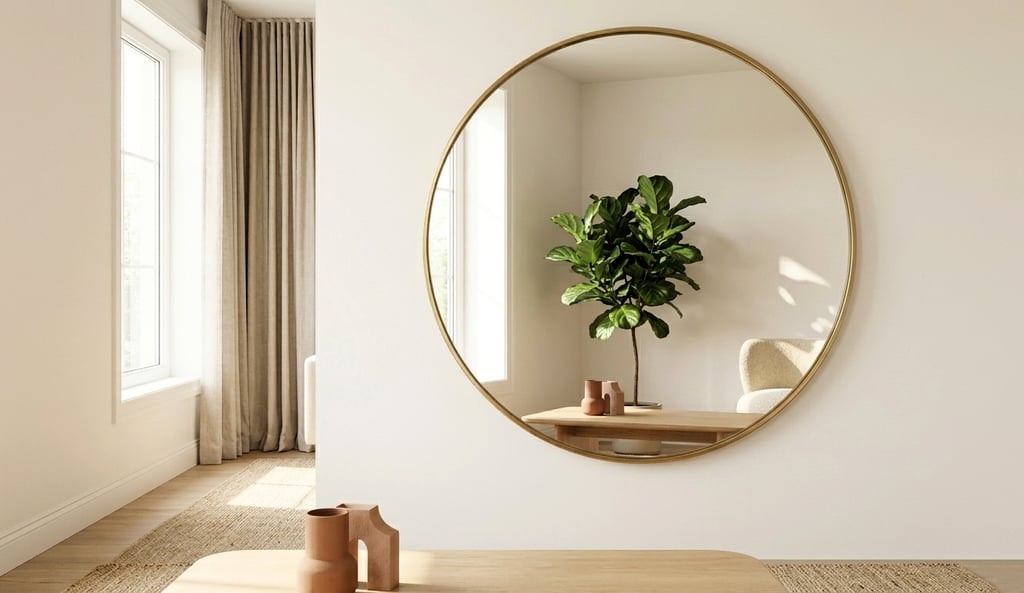
A well-placed mirror in a small living room essentially creates a second window. It bounces light, extends sightlines, and adds a visual dimension that the room doesn't actually have.
A mirror that reflects another wall does nothing. A mirror that reflects natural light, a window, or an interesting object doubles the best part of the room.
The placement that works best: Opposite or adjacent to a window. Light hits the mirror, and the room feels immediately brighter and deeper.
Size matters too. One large mirror does more than several small ones. A small grid of mirrors can work but only if executed cleanly—any visual clutter cancels out the spatial benefit.
What doesn't work: A mirror that faces a dark corner, a cramped wall, or another dark piece of furniture. You're just reflecting the problem back at yourself.
5. Lighting: The Thing That Makes Everything Else Work
No amount of good furniture arrangement or color choice overcomes bad lighting.
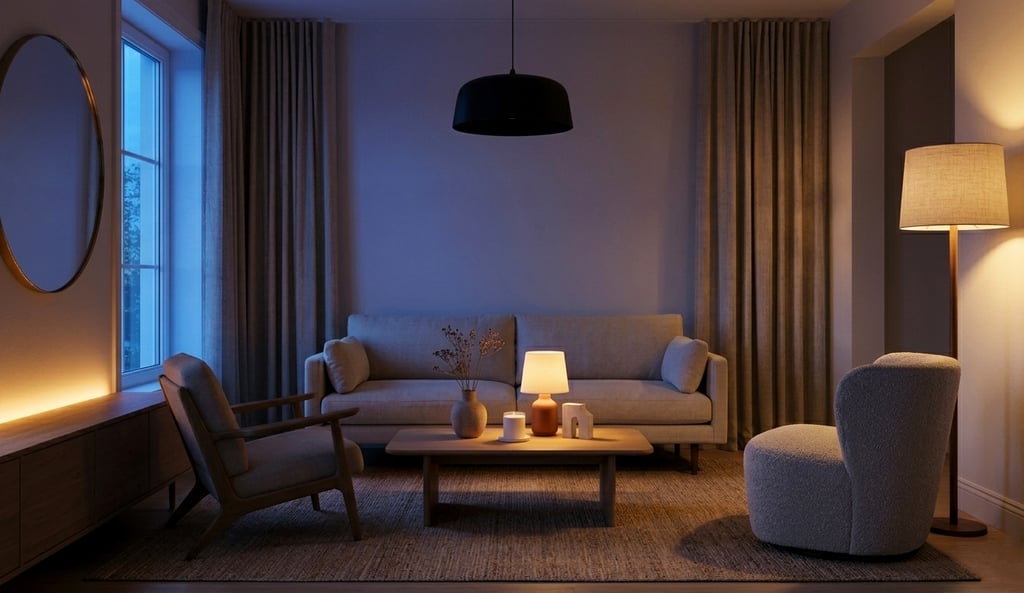
Small living rooms need layered light—not one overhead light doing all the work. A single ceiling light flattens a room, kills shadows, and creates a harsh institutional feel that makes even a well-designed room look basic.
The layered lighting approach:
Ambient (background): Ceiling light or recessed lighting on a dimmer. Never at full brightness in the evenings.
Task (functional): Floor lamp next to the sofa for reading. Wall sconce next to a chair.
Accent (atmosphere): Small table lamp on a sideboard, LED strip behind a shelf or TV unit, candles on a coffee table.
When all three layers are on together in the evening, the room gains depth and warmth that no amount of styling in flat overhead light can replicate. The shadows matter. The pools of light matter. This is what creates the feeling of a space that wraps around you instead of exposing you.
Warm bulbs only—2700K to 3000K. Cool white lighting in a living room is the fastest way to make it feel like an office.
4. Vertical Space: The Most Wasted Opportunity in Small Rooms
Most people decorate their small living room horizontally and leave the top half of the room completely ignored.
This is a significant missed opportunity. Height draws the eye upward and makes ceilings feel higher—which instantly makes the room feel larger. You don't need tall ceilings to use this principle. You need tall elements.
Floor-to-ceiling shelving makes a room feel library-like and grand, even in a small flat. The vertical line of the shelving stretches the eye up and fills the wall in a way that reads as architectural rather than storage-heavy.
Tall floor lamps do the same thing the vertical line pulls the eye upward, and the light at the top of the room illuminates the ceiling and creates height.
Hanging curtains from the ceiling, not from the window frame. This is one of the highest-impact, lowest-cost tricks in interior styling. When curtains hang from ceiling height to the floor regardless of where the actual window sits — the room feels dramatically taller. Most people hang curtains just above the window. Move them up. The difference is remarkable.
The Furniture Rule That Changes Everything
Here's the counterintuitive truth: Pulling your furniture away from the walls makes a room feel larger.
When sofas and chairs hug every wall, the centre of the room becomes dead space, and the eye reads the room as a waiting area.
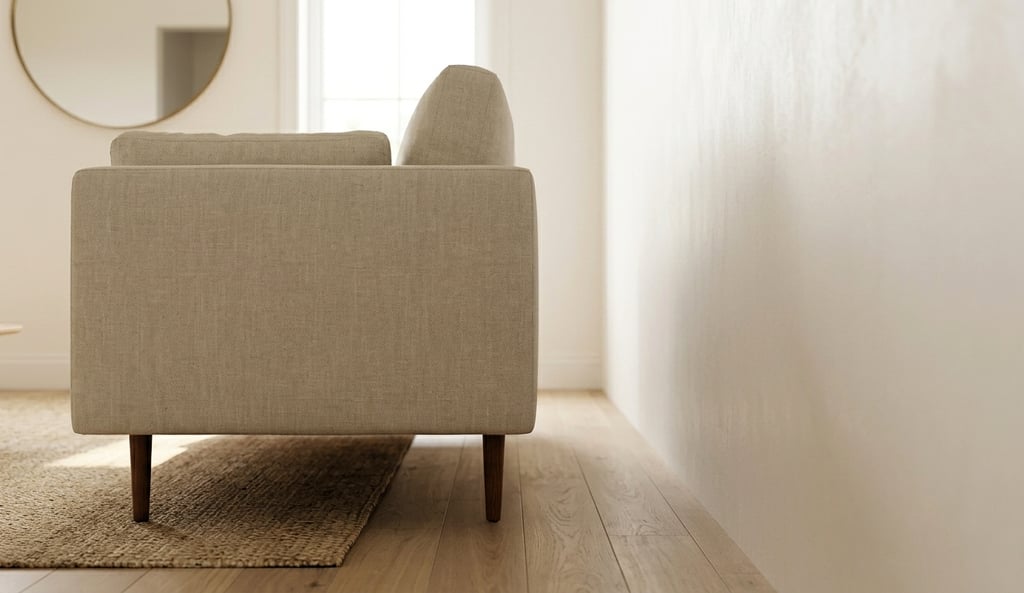
When you float furniture—even just a sofa pulled 15–20 cm from the wall—the room suddenly has depth. The space behind the sofa creates a visual breathing room that reads as intentional, not empty.
A few other principles that work:
Choose furniture with legs: Sofas and chairs with visible legs create the illusion of floor space. The eye sees more floor = more room.
Bulky furniture that sits directly on the ground blocks floor sightlines and makes the room feel lower and heavier.One large sofa over two small ones: Two small sofas create chaos. One well-proportioned sofa anchors the room and feels considered.
Avoid corner overcrowding: Every corner does not need furniture in it. A bare corner with one tall floor lamp reads as elegant restraint.
Three pieces of furniture crammed into a corner read as a storage problem.
2. Colour: The Fastest Way to Open a Room
Light colors reflect light and push walls outward. This is physics, not opinion.
But "light colors" doesn't mean white walls and beige floors. The color strategy that works best for small rooms is a tonal palette—where walls, large furniture, and soft furnishings stay in the same color family, just in different shades and textures.
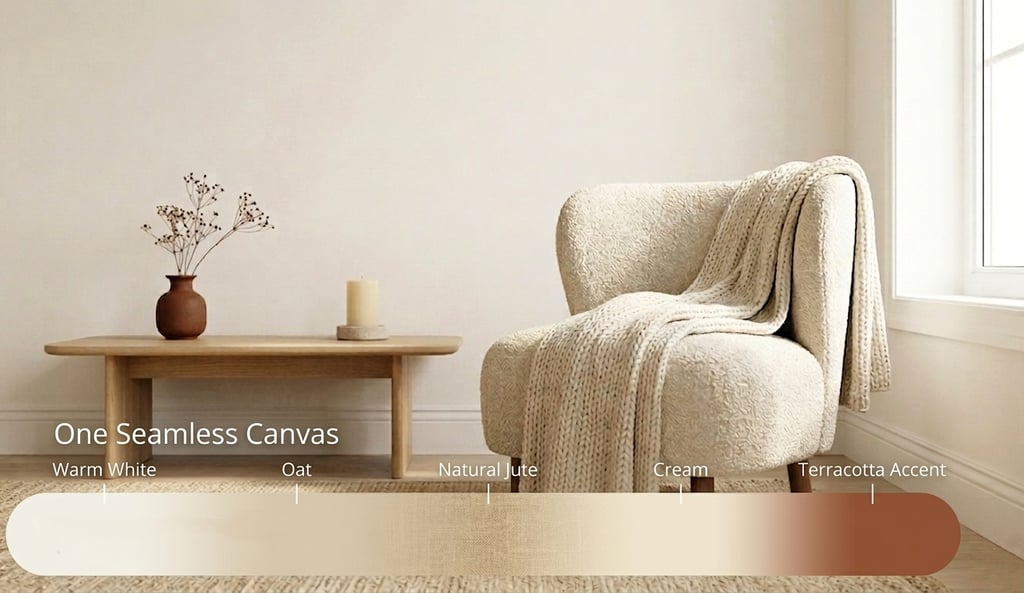
Think: Warm white walls, an oat linen sofa, a natural jute rug, and cream cushions with one terracotta accent. Every element is different, but they all belong to the same world. The room reads as calm and continuous instead of busy and interrupted.
What breaks this: A dark accent walls in a small room. Unless you have very high ceilings and very good lighting, a dark feature wall compresses the space and shortens the sightline. If you love dark color, use it on ceiling detail, shelving, or small furniture not on the primary walls.
The trick designers use: Paint your skirting boards and door frames the same color as your walls. When architectural elements blend into the wall instead of cutting across it, the room feels taller and wider. One seamless canvas instead of interrupted sections.
How to Style a Small Living Room So It Feels Twice the Size?
Most people think decorating a small living room means buying smaller things.
Smaller sofa, rugs, and shelves—keep cutting until the room looks sparse and sad.
That's not how it works. The rooms that feel twice their size aren't emptier—they're smarter. Every decision is deliberate: Where the eye travels, how the light moves, what gets hidden, and what gets shown.
This post covers exactly the real techniques that interior designers use to make small spaces feel open, calm, and expensive.
Why Your Living Room Feels Smaller Than It Is
Before we fix anything, we need to understand the real problem.
Small living rooms feel claustrophobic for specific, fixable reasons—not because they lack square footage. The most common culprits are furniture pushed against every wall this makes a room feel smaller, not bigger, too many visual interruptions—busy patterns, mismatched frames, too many colors competing, and poor lighting that flattens the room and kills depth.
Once you know what's creating the feeling of smallness, you can undo it—without knocking down walls or buying new furniture.
FAQs
What colours make a small living room look bigger?
Light, tonal colours — warm whites, oat, cream, soft beige. Keep walls and large furniture in the same colour family so the eye travels without interruption.
What size rug should I use in a small living room?
Larger than feels right. At minimum, front legs of all seating should sit on the rug. When in doubt, go one size up.
Should I push furniture against the wall?
No. Pull it 15–20cm away. It creates depth and makes the room feel more intentional, not smaller.
How do I make a small living room feel expensive on a budget?
Move the sofa off the wall, add a warm floor lamp, edit every surface to three objects maximum. These three changes cost almost nothing.
How many light sources does a small living room need?
At least three — one ambient, one task lamp, one accent source. A single overhead light flattens the room.
New To Veynora
Subscribe for thoughtful guides on building a life that actually feels like yours